A restaurant manager in Málaga province drives 220 km each working day because coastal housing is unaffordable. Her 48,400 km annual commute brings heavy fuel and vehicle costs.
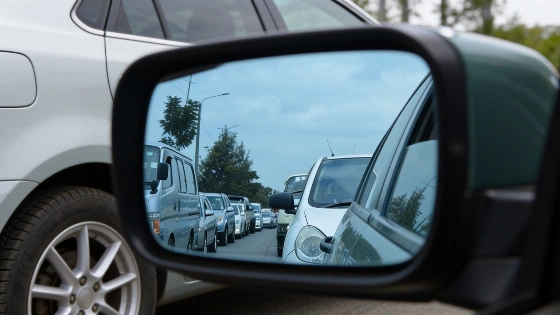
From Mollina, María Inmaculada Jiménez makes the daily drive to La Cala de Mijas because she cannot afford a home near the coast. Her 220-kilometre round trip is an extreme case of “super-commuting,” a long journey to work from somewhere more affordable.
The annual toll reaches 48,400 km, based on 220 working days and a daily round trip of 220 km. At an average speed of 90 km/h, that means roughly 540 hours behind the wheel each year, or the equivalent of 13 working weeks.
At that mileage, vehicle wear and the car’s mileage history matter. A used-car mileage report examined the risks of odometer fraud in imported vehicles.
The cost estimates depend on what gets counted. Using RACE’s reference of more than €1,000 in annual car costs for 15,000 km, the fuel bill alone would exceed €3,200 a year. Hacienda’s reference of €0.26 per kilometre puts the annual figure at €12,584, or just over €1,000 a month. That calculation includes depreciation and wear, not only fuel.
A car assumed to have a useful life of 200,000 km would be used up in about four years at this rate. The source estimates third-party insurance at €503 a year. An oil-and-filter change costs €130 to €150. Replacing them roughly every 15,000 km means about three services a year. Insurance and oil changes alone approach €900, before fuel or tyre costs. Unexpected repairs would add more.
Office workers can sometimes take a long commute once or twice a week in exchange for more space. Restaurant staff have to be on site, often five or six days a week, and rotating shifts make travel harder to organise.
US research shows how commuting distances fall unevenly across workers. A Stanford study of two million trips in the ten largest US cities found that journeys of at least 40 miles rose from 15.8% to 18.5% of trips after the pandemic. Trips of 75 miles or more grew by almost a third, reaching around 3%. Those commutes typically take about two hours and 20 minutes each way. A UCLA study of Los Angeles found that super-commuters were more likely to have high incomes. Low-income residents used buses six times more often.
Housing costs help explain the pressure in Málaga. Idealista put the average price of a room in Spain at €430 a month in the first quarter of 2026, compared with €437 in Málaga city. Rents in La Cala de Mijas can approach twice that level. At the June rent level of €15.3 per square metre, an 80-square-metre flat would cost about €1,200 a month. Urban land prices also topped €207.8 per square metre in the second quarter, reaching €430 in municipalities with more than 50,000 residents. Separately, an agreement dated 1 October 2026 between the Instituto Nacional de Estadística and the Consejo General del Notariado set out statistical work on real estate and national-account estimates. It describes the Índice de Precios de Vivienda, or IPV, a quarterly measure tracking transaction prices for free-market housing, including new and existing homes.
Hospitality workers’ representatives have linked the housing squeeze to the sector’s ability to recruit. Víctor Márquez, secretary general of Sintrah, told El Mundo that tourist accommodation creates “competencia no equilibrada.” Private owners can buy homes as investments and rent them to visitors. Hotels and restaurants face more regulation, alongside labour costs and tax requirements. The concern is that short-term tourist rentals remove homes from the residential market while pricing out workers the tourism industry needs.
A proposed increase in Spain’s minimum wage could raise workers’ pay, but no 2027 figure has been set. On 8 October, the Labour Ministry asked its experts’ commission to make a proposal by early November. Talks with social partners are due to follow. Yolanda Díaz has said the process should not wait until the 29 November election, so companies know the rate by 1 January. Experts expect an increase of more than 4% on the current €1,221 a month, paid in 14 instalments. CCOO is seeking more than 5%, or roughly €50 to €60 extra per month. This year’s increase was not approved until February and applied retroactively.