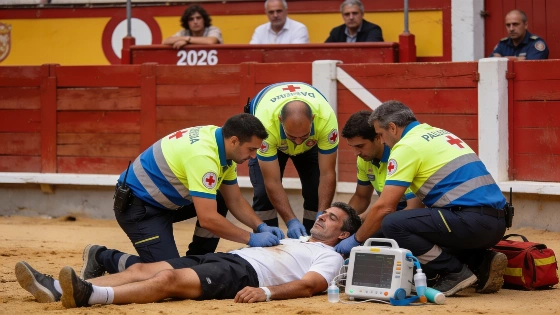
A 58-year-old man suffered a life-threatening injury after being gored by a bull in Navalcarnero. The incident forced an emergency operation in the bullring before he was airlifted to hospital. The festival's status and safety measures now face scrutiny.
The final day of Navalcarnero’s festival turned grim when a 58-year-old man was left in critical condition after being gored during the last encierro. Medical teams had to perform emergency surgery right in the bullring, a stark reminder of the risks that remain part of these long-standing traditions.
The man had climbed onto the talanquera, leaning into the bull run route, but slipped just as a bull charged past. The animal struck him in the left side of his chest, causing a deep open wound. Telemadrid aired footage of the moment, showing him collapse as people rushed to help.
The incident occurred on September 13 at approximately 13:48, as confirmed by multiple Spanish news outlets and Madrid emergency services.
Madrid emergency services said the alert came in at 13:48. By the time paramedics arrived, doctors were already operating in a makeshift area inside the arena. Once stabilized and intubated, the man was flown by Summa 112 helicopter to Hospital de La Paz in Madrid, where he remains hospitalized.
This year, Navalcarnero’s fiestas were officially recognized as a Fiesta de Interés Turístico Regional by the Comunidad de Madrid, marking more than four centuries of bull-running tradition. The encierros, part of the Fiestas Patronales for Nuestra Señora la Virgen de la Concepción, are known for their late-night starts—most begin at 1:00 a.m. The final run, though, took place at 12:30 p.m. in daylight, using bulls from the recortes competition.
Despite the festival’s history and new official status, the incident highlights the dangers that come with these events. Emergency teams had to act quickly, and their intervention likely prevented the man’s death. His condition remains extremely serious. The episode has renewed debate about how to balance tradition and public safety at Spain’s regional festivals.
Medical teams began emergency surgery directly in a makeshift operating area inside the arena before the arrival of the evacuation helicopter, a detail highlighted by both Telemadrid and El Mundo. This rapid intervention is credited with stabilizing the victim before his transfer to Hospital de La Paz in Madrid.
Navalcarnero’s encierros are among the oldest in the Madrid region, drawing crowds every September. Most runs end without major incident, but the mix of unpredictable animals and packed crowds means serious injuries are always a risk. Needing emergency surgery on-site is a clear sign that, even with modern medical support, the dangers are real. As the town looks back on this year’s fiestas, questions about acceptable risk in the name of tradition remain. The new recognition from the Comunidad de Madrid raises the festival’s profile, but also brings more responsibility to keep people safe.