The eviction of 87-year-old Maricarmen Abascal has triggered a rare moment of unity among Spain's divided ruling parties. Her case has become the catalyst for urgent negotiations on a sweeping housing decree aimed at preventing further evictions.
Police carried Maricarmen Abascal, 87, out of her Madrid home on a stretcher. She uses a wheelchair. Now she has nowhere to go. Her eviction did what months of political debate could not. Spain's government and its uneasy allies are now under pressure to act on housing. The case is impossible for Pedro Sánchez and his coalition to ignore.
Saturday brought crowds to Madrid’s streets. Protesters called out not just regional leaders like Isabel Díaz Ayuso and José Luis Martínez Almeida, but also the national government. Their demand was blunt: pass a decree to stop more evictions like Maricarmen’s. Government sources say the decree will go to the Council of Ministers on Tuesday. Delay is off the table. The political cost is too high.
Estimates of the protest turnout varied widely: Madrid authorities reported around 25,000 participants, while tenant unions and organizers claimed as many as 300,000 joined the demonstrations.
But agreement is still far off. Sumar and Podemos want tough steps—expropriations, a total rent freeze. PNV and Junts push for changes to land laws and tax breaks for landlords. These differences have blocked progress for months. Now, with elections coming and the public watching, no party wants to be blamed for failure. The mood has changed. No one wants to be the obstacle.
Housing has split Spanish politics for years. It has fueled protests and divided lawmakers. Maricarmen’s story has forced the government to move. Housing Minister Isabel Rodríguez has spent months in talks. She says the new decree will bring real changes. The details are still being worked out. But the urgency is clear. Time is short.
Past housing deals barely made it through. The last big law passed at the last minute. This time, the stakes are higher. One government member put it plainly: “We’ve had a right-wing majority all term. The housing crisis exploded with that majority in Congress. When we had a progressive majority, we managed to pass the first housing law of the democracy. It’s a good law, but the problem is that PP-led regions refuse to implement it. Where it is applied, like in Catalonia, prices have stabilized, unlike in Madrid.”
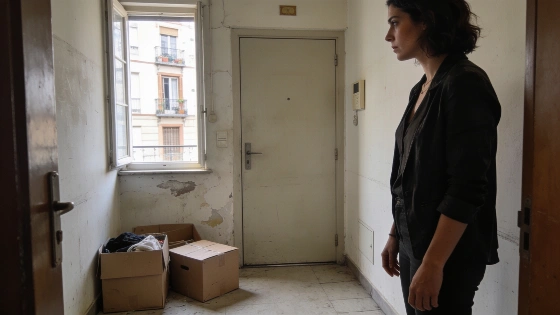
The eviction of Maricarmen Abascal was carried out on September 23, after an investment fund purchased her building and raised her rent from €500 to as much as €2,650 per month, later reducing it to €1,650. The eviction was marked by dramatic scenes, with police carrying her out on a stretcher and clashing with protesters, which further fueled public outrage and calls for urgent housing reform.
The company behind Maricarmen’s eviction has tried to offer a solution. Public anger forced their hand. But she is still homeless. The pressure is so strong that even PP and Vox, usually quick to attack government plans, have softened their tone. They are still expected to vote no, but the rhetoric has changed.
Sumar has drawn a line: “The PSOE cannot keep sitting on the fence. On Tuesday, the Council of Ministers must approve effective measures against the housing crisis. No more half-measures. The solutions have been on the table for months: reinforced rental extensions, protection for families against evictions and vulture funds, regulation of speculative uses like tourist flats and fraudulent seasonal rentals, recovery of Maricarmen’s home, and automatic renewal of rental contracts. We stood firm six months ago and will do so again if necessary. Society will not accept partial or watered-down responses to the drama of evictions and the urgent housing crisis.”
For the left of the PSOE, housing is more than policy. It is part of their identity. The anti-eviction movement helped Ada Colau rise to power. Now it shapes Sumar’s demands. The debate is sharp: risk a bold decree that might fail in Congress but show clear intent, or settle for a deal that gets enough votes from Junts and PNV to prove Maricarmen’s case moved the majority. The choice is tough.
Minister Rodríguez and her team are betting on a deal. For the first time in months, they see a real shot at success. The reason is simple. Maricarmen Abascal changed the game.
From her hospital bed, Maricarmen sent a message: “This is a message for Pedro Sánchez, but also for everyone who has supported me these days. I want what happened to me to serve so it doesn’t happen to others. I want it to inspire people to fight and to change the laws that allowed my eviction.”
Even Junts, after months of denying talks, now admits to negotiations and spells out its demands. The Maricarmen effect is spreading. In Catalonia, support for housing intervention is strong. The story is bigger than Madrid.
The government is racing to finish the decree. No one wants to face voters as the party that failed on housing. The lesson is clear. One woman’s eviction forced Spain’s leaders to face a crisis they kept putting off. For millions living with housing insecurity, this could be a turning point. As reported earlier, the stakes of political timing and public perception have rarely been higher. If the government passes a real decree on Tuesday, it will be because Maricarmen refused to disappear—and because, for once, the system had to listen.