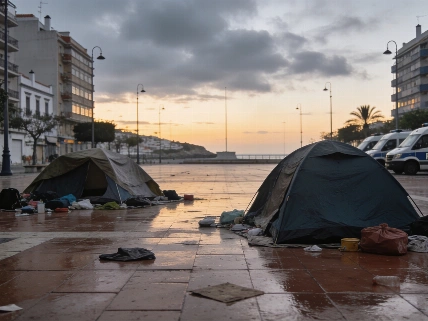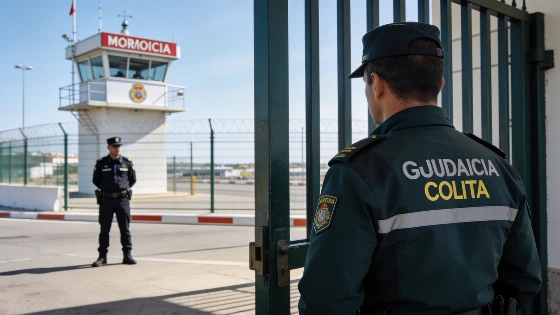
Spain’s Interior Minister denies Moroccan involvement in the Ceuta border crisis. Despite police reports implicating Moroccan gendarmes, Marlaska insists on strong cooperation. The government faces criticism over its handling of migrant returns.
Spain’s Interior Minister, Fernando Grande-Marlaska, has refused to blame Morocco for the mass entry of more than 72,000 migrants into Ceuta, even as police reports point to Moroccan gendarmes’ involvement. Marlaska’s defense of Rabat comes as Spain’s border management faces scrutiny and political opponents step up their criticism.
Speaking to journalists in Madrid, Marlaska dismissed the idea that anyone orchestrated the July influx, saying there is no evidence of Moroccan or foreign planning. He repeated his trust in Morocco, calling cooperation between the two countries "excellent in all areas," and said the crisis could not have been predicted or prevented with the intelligence available at the time. Francisco Pardo, head of Spain’s National Police, also said there is no official document directly linking Moroccan security forces to the planning or execution of the Ceuta events, which Marlaska uses to counter claims of a "Moroccan operation."
A leaked 55-page CENIF police report sent to the National Court judge specifically refers to Moroccan gendarmes actively guiding migrants to entry points during the Ceuta crisis.
Still, internal documents complicate the official story. Reports from the National Police’s CENIF unit mention Moroccan gendarmes’ participation, and the Guardia Civil’s analysis admits that early warnings did not anticipate the scale of the event. Despite these findings, Marlaska insists there is no "logical, reasonable or objective" proof linking Morocco or any other state to the crisis, echoing Prime Minister Pedro Sánchez’s earlier statements. Reuters has reported that Sánchez said the government has no reliable evidence that Morocco organized or carried out the incident, and he suggested some accusations are part of disinformation campaigns.
Judicial investigations are ongoing. Marlaska has called for patience and for all images and data to be reviewed in context. He also defended high-ranking officials against accusations of a cover-up, calling claims that references to Morocco were removed from reports "falsehoods." He strongly defended Guardia Civil general Luis Peláez, dismissing the allegations as baseless attacks on the institution.
The political fallout has been quick. Marlaska criticized opposition leader Alberto Núñez Feijóo for what he called a lack of seriousness and unwillingness to help, after Feijóo accused the government of planning concessions to Morocco that were allegedly blocked by Ceuta’s president. Marlaska said those unwilling to contribute constructively should "stay home."
The number of participants in the Ceuta crisis has been clarified in recent publications as approximately 70,000 to 72,000 people, according to Reuters and European press. This scale has made the debate over the interpretation of police reports particularly sensitive and politically charged.
Reuters
On the ground, the government says 90% of those who entered Ceuta were returned within 24 hours, presenting this as proof of effective cooperation with Moroccan authorities. Marlaska also said Morocco continues to accept all migrants who voluntarily approach the border to return, with more than 4,200 people repatriated since August. For those still in Ceuta, the government promises to apply the law strictly, with expedited returns for anyone not qualifying for international protection.
This is not the first time the Spanish government has faced questions about its handling of the Ceuta border. As reported earlier, previous police assessments have also shown how difficult it is to assign responsibility, and political tensions over migration policy have surfaced repeatedly in Madrid and Ceuta.
Spain’s response to the Ceuta crisis shows a government determined to keep its partnership with Morocco, even as public skepticism and internal dissent grow. Marlaska’s refusal to assign blame—despite mounting evidence and political pressure—signals a choice to prioritize stability with Rabat over full transparency about the border’s weaknesses. The government’s focus on cooperation may bring short-term calm, but questions remain about accountability and Spain’s ability to control its borders.