Mercadona's market share has stopped growing as inflation and rising fuel prices push shoppers toward discount chains. With government subsidies set to expire, Spanish households face more uncertainty.
Mercadona, Spain’s largest supermarket chain, is feeling the effects of persistent inflation as its market share stops growing and rivals like Dia and Lidl attract more customers. According to the Instituto Nacional de Estadística (INE), inflation in August reached 4.3% year-on-year, the highest since February 2023 and up from the previous month. This figure, based on finalized INE data, shows a clear rise in consumer prices across Spain.
The main driver is higher fuel costs, with oil prices again above 100 dollars per barrel. This has kept inflation high and pushed the underlying rate—excluding energy and fresh food—to 2.9%. While this is slightly lower than July, it is still well above the European Central Bank’s 2% target. INE and other official sources point to gasoline, diesel, and broader energy costs as the main reasons for the increase.
"Spain's harmonized consumer price index (HICP) for the EU reached 4.6% year-on-year in August, outpacing the national CPI and signaling stronger inflationary pressure compared to the eurozone average."
— Reuters
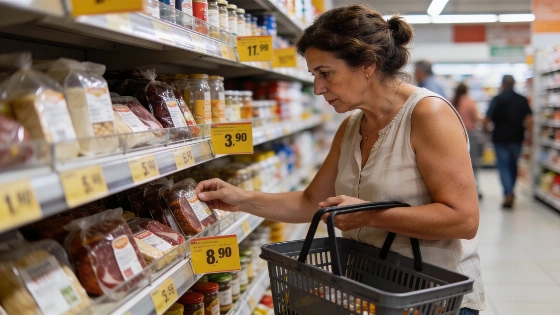
Food and non-alcoholic beverage inflation has slowed to 2.3% annually, but overall price pressures are changing how people shop. More consumers are turning to discount chains like Dia and Lidl, which is cutting into Mercadona’s lead. The Ministry of Economy links the August inflation jump mainly to fuel, citing the ongoing energy shock tied to the conflict in Iran and a base effect from last year’s price drop. Regional and sector reports show discounters gaining ground, with Mercadona facing tougher competition in several provinces.
Earlier this year, inflation seemed under control, just above the ECB’s preferred range. That changed after the United States and Israel launched strikes against Iran in late March. The resulting disruption in key trade routes, especially through the Strait of Hormuz—a passage for a quarter of the world’s oil and gas—has kept global energy markets under pressure. A brief truce in June between the US and Iran did not ease these bottlenecks, so international prices remain high and Spanish consumers are still affected. Independent European media and energy analysts point to ongoing tension around oil supply routes as a steady driver of energy-led inflation across Europe.
Government measures to soften the blow, such as the 20-cent per litre diesel discount and 5-cent per litre gasoline subsidy, are still in place but will expire at the end of September. With no end to the geopolitical crisis and no new support announced, Spanish households face growing uncertainty about future costs.
"Several publications note that the rise in fuel and electricity prices is outpacing wage growth, leading to a decline in household purchasing power. This trend is putting additional pressure on Spanish consumers, especially as government relief measures near their expiration."
— OKDiario
Mercadona’s stalled growth reflects not just its own strategy but the wider impact of external shocks and policy limits on Spanish retail. As inflation continues and government relief ends, discount chains that can keep prices lower or adapt quickly are gaining an edge. The INE’s data highlights the need for both retailers and policymakers to address the underlying weaknesses in Spain’s consumer economy. Without new action, pressure on household budgets and on established market leaders like Mercadona is likely to increase in the coming months.