Mercedes has overhauled the EQS with a new 800-volt battery, longer range, and a reworked interior. The electric flagship now targets the comfort and prestige of the S-Class. Does it finally measure up?
Mercedes has given the EQS a significant update, fitting its electric flagship with a new 800-volt battery system and a series of luxury improvements. The goal is clear: bring the EQS closer to the standard set by the S-Class. Recent reviews and model data clarify some early confusion about the specs. The updated EQS now offers a WLTP range of up to 790–816 km and supports DC charging up to 200 kW, not the 350 kW figure that circulated earlier. These numbers are confirmed by sources like Consumer Reports and AutoHled for the 2026 model year.
The EQS has struggled to step out of the S-Class's shadow. Despite a high-profile launch and heavy investment, buyers remained unconvinced that it could truly replace the combustion flagship. Sales lagged, and Mercedes had to cut prices in China, its most important overseas market. The smaller EQE is already on the chopping block, with an electric C-Class set to replace it. Still, Mercedes is sticking with the EQS, focusing on refinement and technology. Industry analysts see these changes as part of a broader push to reposition the EQS closer to the S-Class, especially in response to competition in China and shifting customer expectations.
Recent market listings confirm that the updated EQS has already launched in several countries, including Australia, with specific pricing for the 2026 model year.
— GoAuto
Technological leap
The main change is a new battery chemistry and architecture. The EQS now has 122 kWh of capacity, up from 118 kWh, giving it a range that rivals diesel sedans and even challenges the S-Class. Depending on the version, output ranges from 408 to 585 CV. There's also a new entry-level EQS 400 with 367 CV and 112 kWh, bringing the starting price below 100,000 euros. Official data shows that WLTP range varies by market and spec, with some UK reviews listing up to 574 miles (about 925 km), while others cite 790–816 km. Charging tops out at 200 kW DC, allowing a 10–80% charge in about 31 minutes—lower than some earlier claims.
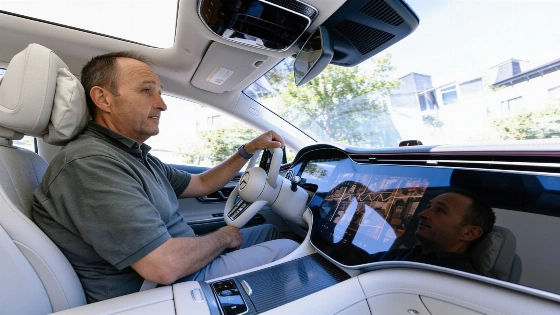
Inside, Mercedes has worked to close the gap with the S-Class. The cabin now uses more leather, detailed stitching, plush headrest cushions, and even heated seatbelts. The grille is larger and can be illuminated, the headlights are more advanced, and the hood features two powerdomes with an optional illuminated star. These details are meant to evoke the prestige of Mercedes' most iconic sedan. According to Auto Express, these changes aim to give the EQS true flagship status and address earlier criticism about luxury and comfort.
Still, the EQS doesn't match the S-Class in every area. Rear seat comfort falls short, and while the front seats are better than before, they don't reach the level expected at this price. The cabin feels more confined, a reminder that the EQS was designed as its own model, not a direct electric copy of the S-Class.
Mercedes is reportedly restructuring its electric sedan lineup, with industry sources indicating that the EQE may be discontinued in favor of a future electric C-Class. Upcoming electric sedans are expected to share more unified platforms and architectures, reflecting a strategic shift in the brand's EV development.
— Automoto.it
Driving experience
Mercedes now offers a steer-by-wire system as an option, replacing the traditional steering column with electronic controls. This setup allows for variable steering ratios, easier maneuvering in tight spaces, more stability at speed, and extra room in front of the driver. It takes some getting used to, especially with rear-wheel steering also available, but after a day behind the wheel, it feels natural.
On the road, the EQS is quiet and composed. The suspension smooths out bumps, and the cabin is well insulated from outside noise—on par with the best in its class. Long trips are now more practical, thanks to the improved range and faster charging. As reported earlier, the push to refine electric interiors and driving dynamics is heating up across the industry, and Mercedes is determined to keep pace.
Luxury meets reality
Even with these upgrades, the EQS is still defined more by ambition than by legacy. The new battery and steer-by-wire system give it a technical edge, and the interior updates bring it closer to the S-Class experience. But it still can't fully match the space and indulgence that have made the S-Class a benchmark for decades. Digital features like the MB.OS operating system and AI voice controls are impressive, but they don't make up for the platform's physical limits.
Mercedes has made the EQS a more convincing flagship, but the story isn't finished. The current model serves as a bridge between the brand's combustion past and its electric future. For buyers who want the longest range, fast charging, and a taste of next-generation luxury, the EQS is now a strong option—though it's still a different experience from the S-Class. The real test will come when Mercedes launches a true successor that brings both lineages together in a single flagship.