Hundreds of migrant women and children remain in a temporary camp in Ceuta. Their personal stories highlight the human side of the migration debate. Local authorities and NGOs face mounting pressure as arrivals continue.
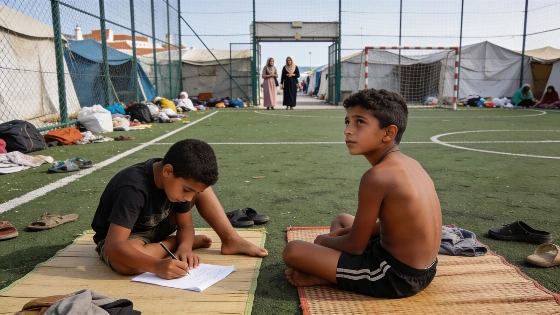
In Ceuta, more than 350 women and children who recently crossed from Morocco are now living in an improvised camp on an outdoor futsal pitch in the La Reina neighborhood. The site, surrounded by fences and guarded at night, has become a temporary refuge as authorities struggle to respond to the influx. Many of the minors arrived alone, separated from family, and now face an uncertain future while political debate intensifies over their presence.
Inside the camp, children spend their days waiting, sleeping on the ground or, if fortunate, on thin mats. Their daily routines are shaped by basic needs: washing with buckets in the open, sharing limited facilities, and enduring the heat. Despite these conditions, the children express ambitions that go beyond their immediate hardships. Some dream of becoming footballers, nurses, or police officers, hoping for a chance to build a life in Spain.
One 12-year-old, Ismaíl, arrived with his older brother but has since lost contact with him. He now navigates life in a foreign country without knowing the language, yet remains optimistic about his future. Another teenager, Maryam, 15, left Tetuán with relatives, driven by the hope of supporting her family and finishing her education. She writes in Arabic, asking for her status to be regularized so she can contribute to society. For many, the journey was marked by fear and uncertainty, but the desire for a better future remains strong.
Samia, a 20-year-old former teacher from Morocco, now acts as a translator for younger arrivals. She explains to Maryam the political resistance some parties have shown toward accepting migrant minors in other regions. The news surprises Maryam, who questions why they are denied documents. The camp’s residents, mostly unaware of the broader political controversy, focus on daily survival and their hopes for stability.
Conditions remain difficult. The city has only recently installed a second portable toilet after repeated requests from local leaders. Many families still sleep outside, as the camp is at capacity. According to Save the Children, over a thousand minors are currently sleeping on the streets of Ceuta, outside the official protection system. The situation has prompted urgent discussions at the national level, with the Ministry of Youth and Children calling a meeting to address the crisis.
Among those waiting is Mohamed, an eight-year-old who, along with his mother, previously slept outdoors before finding space in the camp. He describes his fear of soldiers and his wish to become a police officer to help his mother. Like other children, he writes down his aspirations, hoping for the opportunity to prove himself if given legal status. Each day follows a simple routine: meals, play, and waiting for news.
The humanitarian challenge in Ceuta is not new. As highlighted in recent efforts to reunite migrant minors with their families, the city continues to face pressure as arrivals outpace available resources. Local volunteers and neighborhood leaders have played a key role in providing shelter, but the demand far exceeds capacity. The ongoing debate over the future of these minors underscores the complexity of migration policy in Spain.
Ceuta’s experience reflects broader trends in migration across southern Europe. The city’s proximity to Morocco makes it a frequent entry point for those seeking a new life in the EU. Spanish authorities, NGOs, and local communities are forced to balance humanitarian needs with political realities. The stories emerging from the camp put a human face on a crisis often discussed in abstract terms, reminding policymakers and the public of the individual hopes and challenges behind the headlines.