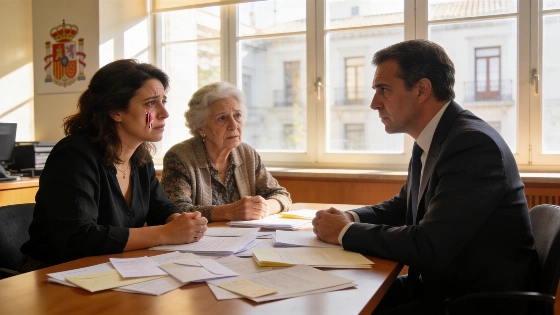
Spain Demands Improved Conditions for Two Citizens in Guinea Prison. Two Spaniards have been held for 15 months in Black Beach prison in Equatorial Guinea. Their families have secured a personal meeting with the foreign minister. Authorities promise assistance in access to medical care and visits.
Spanish Foreign Minister José Manuel Albares has pledged to personally address the conditions of two Spanish citizens detained in Equatorial Guinea. The families of Javier Marañón and David Rodríguez, who are being held in the notorious Black Beach prison, met with the head of the Foreign Ministry in Madrid for the first time after months of appeals and protests. Their main goal is to secure regular access to medical care, as well as permission for visits from relatives and a lawyer.
According to EL PAÍS, during the 15 months of imprisonment, relatives were only able to speak with Marañón once—a brief Christmas phone call. At all other times, contact is limited to rare consular visits, which take place every two months and are always supervised by the prison administration. Unlike local inmates in the same case, Spanish prisoners are not allowed meetings with their family or their own lawyer.
Pressure on the authorities
The families of those detained have repeatedly sought help from various institutions: they wrote letters to the Royal Palace and the Nunciature, staged hunger strikes, and tried to meet politicians at public events. Only after persistent efforts did they manage to secure a personal meeting with Albares. The minister assured them that the Spanish side is negotiating with the authorities of Equatorial Guinea to ease the conditions of detention and increase the frequency of consular visits.
Relatives report that conditions at Black Beach are extremely harsh: inmates are held in overcrowded cells, sometimes forced to share a single mattress between two people, and access to medical care is virtually nonexistent. Neither Marañón nor Rodriguez has ever been convicted, and a trial date has yet to be set. According to the families' lawyer Manuel Madrid, the charges against them are based on assumptions of violations during the installation of digital television equipment, but the Spaniards themselves were only ordinary employees of the company Wayang Teknical.
Health and Inequality
The health of both prisoners has deteriorated during their time in jail. Their families report that Rodriguez has twice been close to death due to prison conditions and hunger strikes. The lack of medicine and medical care forces families to deliver essential drugs and basic necessities on their own. Meanwhile, local employees of the company, also detained in the same case, have the opportunity to meet with lawyers and relatives, as well as to petition the court.
In October last year, the European Parliament condemned the conditions of the Spaniards' detention and called on the Equatorial Guinean authorities to immediately provide them access to medical assistance, legal protection, and a fair trial. Despite this, the situation remains unchanged, and families continue to fight for the release of their loved ones, or at least for an improvement in their conditions.
Context and Response
The story of Marañón and Rodríguez has become one of the most high-profile cases in Spanish diplomacy in recent years. Their detention is linked to an investigation into violations during the implementation of a digital television project worth over 33 million euros. The company's management left the country, while ordinary employees ended up under arrest. According to the lawyer, the lack of a trial is due to the difficulty of substantiating charges against ordinary workers.
Access to medical care and conditions in Spanish and foreign prisons regularly become topics of public interest. For example, earlier in Malaga, guarantees of funding for healthcare and education were discussed in detail in the article on the position of the head of Andalusia regarding social spending. The case of the Spaniards in Equatorial Guinea once again raises the issue of protecting citizens' rights abroad and the state’s role in such situations.