Transport Minister Óscar Puente has sharply criticized King Felipe VI for appearing in a photo with Javier Negre. The incident, which took place in Colombia, has sparked debate over the monarch's public associations and the role of controversial media figures.
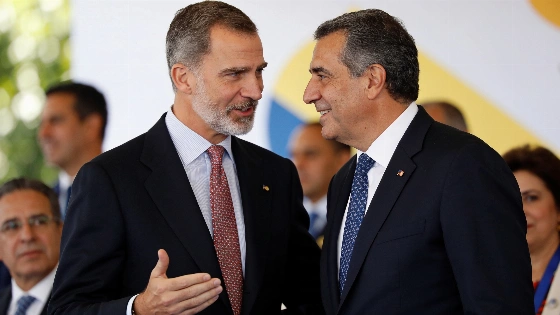
Spain's Transport Minister Óscar Puente has ignited a new controversy by publicly denouncing King Felipe VI for posing in a photo with Spanish media personality Javier Negre. The incident, which unfolded during the inauguration of Colombian President Abelardo de la Espriella in Cali, has drawn sharp reactions across political and media circles.
Puente, known for his active presence on X (formerly Twitter), posted a message on Monday describing the situation as an 'absolute ignominy.' His comment referred to a widely circulated video showing Negre approaching the King, requesting a photo, and later sharing the images on his official channels. The footage, originally recorded last Friday, quickly gained traction online, fueling debate about the appropriateness of the monarch's interactions.
Javier Negre, a 41-year-old Spanish communicator and president of EdaTV, has become a polarizing figure in recent years. His media network, which began with a focus on Spanish far-right circles, has expanded internationally and reported significant revenue growth—from €346,000 in 2021 to €1.3 million in 2024. Despite this, much of EdaTV's financial backing remains undisclosed, with known support from administrations led by the Partido Popular, the Argentine government, and various ideologically aligned business interests.
Negre's approach to securing institutional advertising has been described by former colleagues as direct and persistent, often targeting local officials for promotional deals. His rise has coincided with a broader trend of media figures leveraging political connections for influence and funding, a dynamic that has drawn scrutiny from both supporters and critics.
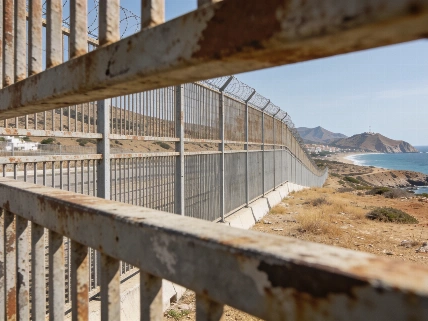
The King's appearance with Negre has not only provoked Puente's condemnation but also revived past controversies. Social media users, including Julián Macías, have pointed out Negre's previous public criticism of Queen Letizia, highlighting the ongoing tension between certain media personalities and the royal family. The debate echoes recent political clashes in Spain, such as those surrounding far-right rhetoric and its impact on public discourse—a topic explored in depth in recent coverage of political tensions in Ceuta.
During the inauguration in Cali, King Felipe VI was seen interacting with several international leaders, including Argentina's Javier Milei. Negre, who boasts nearly 500,000 Instagram followers, described the encounter as a pleasure, further amplifying the event's visibility. The rapid spread of the video across platforms like X has intensified scrutiny of the monarchy's public engagements and the influence of controversial media figures in shaping Spain's political narrative.
For context, the Spanish monarchy has historically maintained a careful distance from overtly political or divisive figures. However, the evolving landscape of digital media and the rise of personalities like Negre have complicated these boundaries. The incident underscores the challenges facing public institutions in navigating new forms of visibility and accountability in the digital age. As debates over transparency, influence, and the role of the monarchy continue, the episode serves as a reminder of the delicate balance between tradition and modern public scrutiny in Spain.