At 18:00 on 27 September 2026, six Garcigrande bulls were scheduled for Sevilla's final Feria de San Miguel fixture at the Real Maestranza de Caballería. Canal Sur carried the event live, but the afternoon produced no triumph.
Morante de la Puebla, Daniel Luque and Borja Jiménez faced bulls that lacked strength and stamina, and showed little bravery when it mattered. The clearest moment came away from the muleta: Luis Blázquez ended more than three decades as a bullfighter.
The 25th fixture of the abono left the matadors little room to work. The fourth bull was returned because of a vision defect. The first substitute, the cuarto bis, also failed to move forward. Advance coverage had reported that the first bull in the lot was replaced for the same reason. Morante dispatched it quickly, with no real opening for artistic work.
Advance coverage also reported that tickets for Sevilla’s closing San Miguel bullfight had sold out, a sign of the importance attached to the season’s final fixture at the Real Maestranza.
On Saturday, Pablo Aguado had earned the Puerta del Príncipe. The closing afternoon came nowhere near that result.
Morante returned to his preferred arena for his fifth and final appearance of the season. He opened the campaign at the Maestranza on Domingo de Resurrección, then made two more appearances during the pre-Feria and Feria de Abril period. He suffered a goring on 20 April, then returned for Corpus and opened the Puerta del Príncipe on 4 June. A summer of intense activity across Spain followed. A bout of lumbalgia kept him out of Logroño during the week, but he remained scheduled to appear in Sevilla.
Morante's view was blunt: the bulls were unfit for proper display, and the corrida became an exercise in endurance. Daniel Luque and Borja Jiménez also failed to turn their work into results. The scorecard laid bare the gap between the three men and the livestock: Morante received an ovation and silence, Luque silence and an ovation, while Jiménez received silence after a warning, then silence again.
El País’s post-fight analysis put the basic responsibility for the disappointment on the modern bull’s lack of forward momentum, rather than any failure of artistry by the matadors. The paper judged that the weak lot extinguished the morantismo the sold-out Sevilla audience had expected to see.
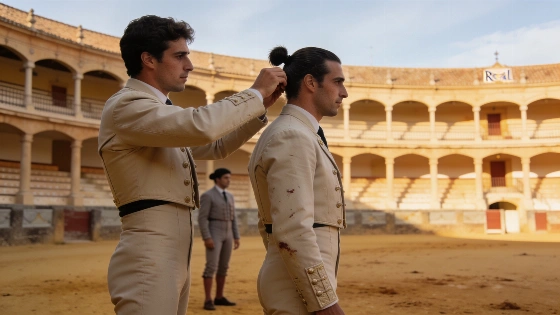
Luis Blázquez was the day's emotional centre. The Valencian banderillero served in Borja Jiménez's cuadrilla and ended his career after more than thirty years. At the end of the bullfight, Jiménez removed his coleta in front of the afternoon's matadors and Blázquez's son.
It was a farewell ceremony, not a consolation for the failed corrida. Its human weight outlasted the six performances in the ring.
The result also stood apart from the force of Morante's wider season. The maestro from La Puebla has filled arenas and drawn attention across Spain. In Sevilla, his presence could not compensate for bulls that faded quickly in the muleta. A separate festival report recently captured a very different kind of Spanish cultural finale. Here, the ending turned on what the animals could not provide.
D. José Luque Teruel presided over the corrida. D. Santiago Sánchez Apellániz was veterinary adviser. D. Luis Arenas was artistic adviser, while D. Luis Ramírez was government delegate. The Garcigrande livestock and all-Sevillian line-up had promised a major closing act for San Miguel. The decisive problem was the lack of fondo de casta.
Sevilla closed its Feria with a plain sporting verdict: the matadors were above their opponents, but the bulls offered no chance of reward. Morante returned, Luque made his effort, and Jiménez showed his commitment throughout the afternoon. For this closing fixture, Blázquez's farewell, marked by the removal of his coleta, carried more weight than the corrida itself.