
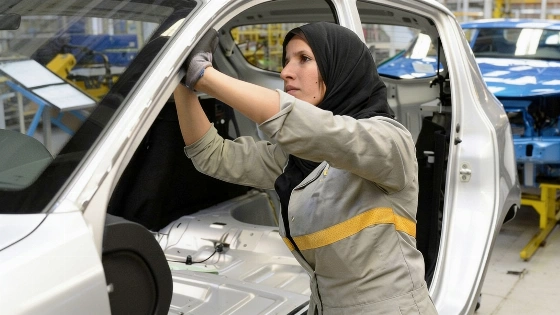
Morocco’s car factories are pulling ahead of Spain not just on wages but on worker attendance. With absenteeism below three percent and a younger workforce, the country is becoming a serious rival for European automakers seeking efficiency.
Spanish car factories have a problem that goes beyond pay. In Morocco, absenteeism in car plants is under three percent. In Spain, daily absence rates sit between nine and ten percent. Spanish executives now see this as a direct threat to their own factories.
This gap is not just a number on a chart. It means thousands more cars built, millions saved on payroll, and a growing sense among industry leaders that Morocco is no longer just a cheap alternative. It is now a serious production rival.
According to recent industry analyses, labor costs per car in Morocco are estimated at just $106, making it one of the most cost-effective locations for automotive manufacturing globally.
Renault and Stellantis have both dug in deep in Morocco. Renault runs two big plants: Somaca in Casablanca, which turns out about 100,000 vehicles a year, and a larger site in Tangier, already at 300,000 units and still growing. Stellantis has its Kenitra plant, open since 2019, producing around 200,000 cars each year. Together, these three plants employ about 13,000 people.
Recent sector reports show Renault’s Moroccan output is even bigger than before. The Tanger and SOMACA plants together are expected to produce between 394,000 and 413,000 vehicles in 2024–2025. That is about 17% of Renault’s global production. Stellantis’ Kenitra plant, while now making over 70,000 small models and electric quadricycles a year, is built for a target of 535,000 vehicles. These numbers, confirmed by several industry sources, show just how far Morocco has come in the global car supply chain.
But what really stuns Spanish managers is how the workforce operates. Moroccan plant workers earn 500 to 600 euros a month—less than a third of what Spanish workers get. But it is not just the pay gap that is changing the game. Attendance is strict. If you do not show up, you do not get paid. More than 100 euros of each worker’s pay depends on showing up. This tough policy, along with weaker worker protections, keeps absenteeism low.
Morocco's integration into European automotive supply chains has been facilitated by the Euro-Mediterranean Agreement of 2000 and specific rules of origin, allowing vehicles produced in Morocco to be seamlessly incorporated into European production networks. This regulatory framework has been cited by industry analysts as a key driver of the sector's sustained growth and export orientation.
Age matters too. Spanish factory teams are usually between 40 and 50 years old. In Morocco, most workers are in their twenties and thirties. This younger workforce brings more energy and flexibility to the line, making the productivity gap even wider.
Morocco does have its own challenges. During Ramadan, European manufacturers have to adjust schedules and routines for workers who do not eat or drink during daylight. Still, the effect on output is small compared to Spain’s ongoing absenteeism problem.
Industry leaders have been warning about this for years. Stellantis CEO Carlos Tavares has said Spain should worry more about competition from the south than from northern Europe. The numbers now prove his point. Moroccan plants are not just cheaper to run—they are also more reliable when it comes to daily staffing.
For Spanish factories, the message is clear. As automakers chase every bit of efficiency, Morocco’s mix of lower wages, younger staff, and near-full attendance is forcing a rethink of what makes a plant competitive. The same pressures are already hitting Spain’s car sector, as shown in a recent report on how electric vehicles are shaking up old business models.
Morocco’s rise as a car-making hub is not just about cutting costs. It is about a new kind of discipline on the factory floor. Spain, with its older workforce and strong labor protections, is struggling to keep up. Unless Spanish plants can fix absenteeism and adapt to new labor realities, the country could lose its edge in one of its biggest export industries.