Spanish dealerships are losing their main source of workshop profit as electric cars need far less maintenance. Independent garages are stepping up, forcing the industry to rethink a business model that has lasted for decades.
Spanish car dealerships are watching their main profit engine stall. Electric cars are changing the repair business fast. For years, selling new cars was never the real moneymaker. The steady flow of oil changes, timing belts, and warranty repairs kept workshops busy and paid the bills. Now, electric cars have wiped out much of that routine work. The old business model is starting to crack. Industry reports from Deloitte and McKinsey show that electric vehicles need far fewer maintenance jobs. Dealerships are scrambling to find new ways to make money, turning to sales and digital services.
Norway shows what happens next. Electric cars make up 96% of new registrations there. Workshops have lost up to half their service hours. Post-sale revenue is down 35%. Volkswagen’s importer says electric models bring in 46% less per visit than combustion cars. The UK and Germany see the same pattern. Auto Trader data shows a typical dealership selling 500 cars a year is losing hundreds of thousands of pounds in service income. In Italy, customers save between 42% and 75% on maintenance with an electric car. Deloitte and McKinsey confirm the hit: an electric car brings in 40% to 60% less workshop revenue over its life. Aftersales makes up only 40% to 50% of a dealership’s turnover, but it can deliver up to 80% of operating profit.
AAA research shows that electric vehicles have significantly lower maintenance and repair costs for owners compared to gasoline cars, directly reducing service center revenues per vehicle.
Dealerships are fighting back. Some have hiked hourly rates, charging top prices for simple jobs like changing wiper blades or cabin filters. Others bundle basic checks into “electric car maintenance” packages, hiding simple inspections behind high flat fees. Brands like Toyota, KIA, and Mazda are trying loyalty programs such as “Toyota Relax” to keep customers coming back. Instead of just raising prices, they offer extra warranty perks and scheduled checks. Toyota Europe says these programs are meant to keep customers loyal with added warranty and inspection incentives.
But electric cars just don’t need as much work. Oil changes, spark plugs, fuel filters, and dual-clutch gearboxes are gone. Still, “zero maintenance” is a myth. Electric cars are heavier, which puts more strain on the chassis and steering, especially on rough roads. Brakes, used less because of regenerative systems, can seize or rust if not cleaned now and then. Even the single-speed reducers need an oil change at about 100,000 kilometers. Manufacturers often gloss over these needs in official schedules, eager to sell the “zero maintenance” idea. McKinsey reports note that as more people buy electric cars, aftersales is shifting from routine maintenance to software, diagnostics, and tougher repairs.
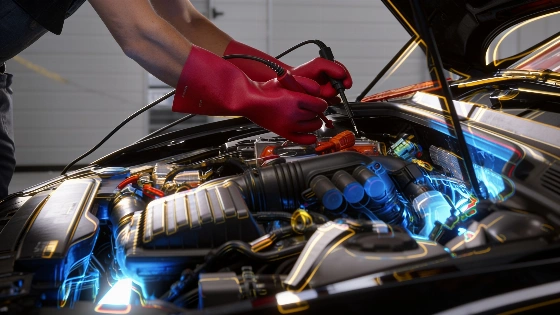
This gap between what carmakers promise and what electric cars really need is where independent garages see their chance. In Spain, Real Decreto 281/2021 sets up a special training course for hybrid and electric vehicle maintenance. It includes a 45-hour high-voltage safety module open to any certified technician. Private certificates like TÜV SÜD are now required for authorized end-of-life vehicle centers under RD 265/2021. The cost to safely disconnect high-voltage systems and swap out battery parts is much lower than replacing a whole battery pack, which is still the standard at many official service centers.
The decline in aftersales revenue due to electric vehicles is not unique to Spain; it is a pan-European trend. Industry reports indicate that as the share of EVs increases, service markets will earn less from standard maintenance and more from software, diagnostics, and advanced repairs.
Even before electric cars took off, aftersales was the real lifeline for Spanish dealerships. Faconauto says aftersales is just 16% of a dealership’s turnover in Spain but brings in nearly half the profit, with margins four to five times higher than car sales. The business model now under threat in Norway is the same one keeping much of Spain’s dealer network alive. As electric cars spread, the question isn’t if the model will suffer, but how fast the pain will hit.
Independent workshops are already changing. More are fixing batteries instead of just swapping them out. This isn’t just happening in Spain. As reported earlier, Chinese brands like BYD, MG, and Chery are adding pressure. They offer cheaper electric cars, challenging both sales and service strategies.
For drivers, the savings are real and show up right away. For dealerships, the electric shift is a direct threat to their core business. The future depends on how fast official networks can prove their value to customers. If not, they risk losing the workshop goldmine to nimble independent garages ready for the new world of electric cars.