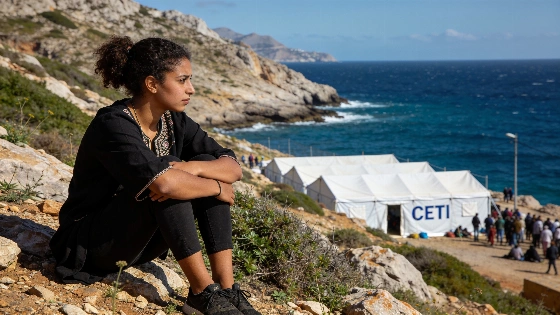
A 28-year-old Moroccan woman swam to Ceuta, fleeing family demands and gender restrictions. She now waits near the CETI, highlighting ongoing migration pressures and personal risks.
A 28-year-old Moroccan woman, Wafae Atid, made a dangerous swim across the border to Ceuta on July 30, seeking to escape the strict expectations imposed by her family and the broader gender inequality she faced in Morocco. Her decision to risk her life at sea underscores the persistent challenges for women in her home country, where, according to her account, women are expected to remain subordinate to men and adhere to conservative dress codes.
Atid has now spent nearly three weeks living on a hillside near the Centro de Estancia Temporal de Inmigrantes (CETI), close to the beach where she arrived. She describes her journey as a last resort, motivated by her refusal to comply with her family's insistence on traditional clothing and her desire for greater personal freedom. Her story is one among many, as Ceuta continues to be a focal point for migrants seeking entry into Spain, often at great personal risk.
The situation at the Ceuta border remains tense, with Spanish authorities maintaining heightened security following previous mass attempts to cross. The experience of Atid reflects a broader pattern of migration from Morocco, where social and familial pressures can drive individuals, particularly women, to undertake perilous journeys. The Spanish enclave has seen repeated incidents of migrants braving the sea, despite the dangers involved and the uncertain prospects upon arrival.
Recent months have seen Moroccan authorities intensify efforts to prevent large-scale crossings, as highlighted in reports of border operations that have stopped hundreds of migrants from reaching Ceuta. For example, a recent crackdown by Moroccan police prevented a mass entry attempt, leading to reinforced security measures on both sides of the border. These developments illustrate the ongoing struggle between migration pressures and border enforcement in the region.
Ceuta's CETI continues to operate near capacity, providing temporary shelter for new arrivals like Atid. The enclave's unique position as a Spanish territory on the African continent makes it a frequent destination for those fleeing restrictive conditions or seeking better opportunities in Europe. The stories of migrants such as Atid highlight the intersection of personal, social, and political factors that drive migration, as well as the complex realities faced by those who reach Spanish soil.
Spain's response to migration in Ceuta is shaped by both humanitarian concerns and the need to manage border security. The experiences of women like Atid bring attention to the specific vulnerabilities faced by female migrants, who may be escaping not only economic hardship but also deeply rooted social constraints. The ongoing arrivals in Ceuta serve as a reminder of the broader migration dynamics at play in the western Mediterranean and the challenges for both migrants and authorities in addressing them.