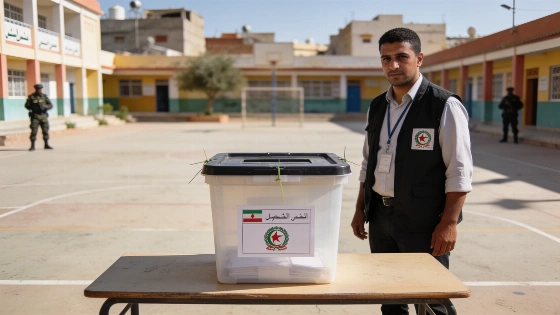
Morocco recorded 61.98% abstention in its legislative elections, with only 38.02% of registered voters casting ballots. The result exposes a wide gap between the registered electorate and the broader population entitled to vote.
Morocco's legislative elections on 23 September 2026 delivered a serious political warning. A record 61.98% of registered voters stayed away. Turnout fell to 38.02%, the lowest level since 2007. The 395-seat Parliament will therefore be formed by a minority of the registered electorate. The Ministry of Interior reported the final figure. Reuters also confirmed it and compared it with turnout above 50% in 2021.
Official participation stood at only 4.23% by 10:00 on election day, rising to 11.34% by 12:00. The early figures showed that weak turnout was visible from the morning rather than emerging only at the end of voting.
The handling of the reported incidents is now under scrutiny. Authorities' actions will determine whether the allegations remain isolated or lead to findings about the conduct of the vote.
The Public Prosecutor's Office is also investigating a video shared on social media. It shows a ballot box containing numerous papers. Local media reports said the papers may have been placed there before voting began to benefit a political party. The allegation remains under investigation and has not been presented as an established result. Prosecutors in Tangier opened an inquiry into footage involving a transparent ballot box and white envelopes or papers. They stressed that the inquiry itself does not establish fraud.
The Public Prosecutor’s Office said it had received 93 election-related complaints between 21 August and 15 September 2026. Authorities reported that 92% of those complaints had been dealt with, offering an indication of the broader electoral-discipline concerns surrounding the campaign.
This year's electoral roll contained 15.8 million people in a country of roughly 38 million. The official register included 15,801,162 voters. Citizens were electing 395 members of the House of Representatives. Voters aged between 18 and 24 made up only 4% of the register. Estimates put the number of Moroccans entitled to vote at close to 28 million. That leaves a substantial gap between legal eligibility and registration.
That gap matters when reading the headline figure. The 61.98% abstention rate applies to registered voters, not every Moroccan who may be entitled to vote. The low registration of young people and the repeated pattern of high abstention still show that the electoral system is failing to bring a large share of the population into the formal process. Analysts and review publications have linked the pattern to long-term voter apathy and weak participation among younger citizens.
Security was especially visible along the borders with Ceuta and Melilla after calls for new irregular crossings. The deployment followed the 30 July entry of around 70,000 people into Ceuta. The source describes it as the largest migration crisis between Morocco and Spain. The border context was also detailed in an earlier border report.
The final count was expected late into the Moroccan night. Seats are allocated according to the number of registered voters in each constituency, not the number of valid votes. That system encourages fragmentation and prevents an outright majority.
Once the definitive results are announced, King Mohamed VI will appoint the leader of the first-placed party as head of government. That party will then have to negotiate a coalition. The outgoing government is led by businessman Aziz Ajanouch. It brings together RNI, PAM and Istiqlal, which represent liberal, conservative and nationalist currents.
Morocco's election has produced two clear facts. It was a formal parliamentary contest, but participation was sharply limited. The next government may gain its legal mandate under the established rules. The 38.02% turnout gives the result a narrower democratic base than the previous election. That is the main message of the vote and the clearest measure of the distance between Parliament and the electorate.