Movimiento Sumar has replaced much of its leadership after months of internal conflict. The party aims to rebuild and prepare for the 2027 elections, focusing on unity and a new political direction.
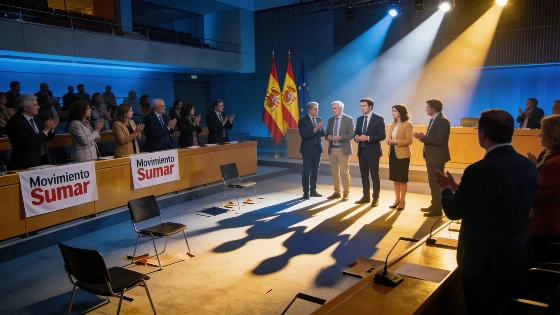
Movimiento Sumar has overhauled its leadership after months of internal turmoil that saw half of its executive team depart. Founded by Vice President Yolanda Díaz, the party is focused on stabilizing its organization and setting a clear course for the 2027 general, regional and municipal elections. At the party’s third assembly in Madrid, Verónica Martínez Barbero, parliamentary spokesperson in Congress, and Rosa Martínez, Secretary of State for Social Rights, were appointed joint coordinators after members adopted a consensus list.
Although Yolanda Díaz will not hold a formal position in the new leadership, having previously announced she would not run again, her presence at the assembly’s closing session showed her continuing influence. The change followed a contentious struggle for control, culminating in the departure of former general coordinator Lara Hernández and several prominent figures, including deputies Txema Guijarro, Agustín Santos Maraver and Manuel Lago, as well as State Secretaries Joaquín Pérez Rey and Amparo Merino.
Hernández’s departure ended a leadership period that began in March 2025. She initially shared the coordinator-general role with Carlos Martín and became sole coordinator after he resigned in August 2025. On 1 July 2026, Hernández resigned from all party posts and left the party’s membership. The internal dispute followed complaints about alleged workplace mistreatment; the party’s investigation closed without sanctions. Hernández said she had faced a “brutal smear campaign” and declared, “I have a clear conscience; I am innocent.”
The assembly aimed to renew the party’s governing bodies and lay the groundwork for a stronger political project with a territorial presence. Its roadmap calls for building an independent identity while working “on equal footing with sister organizations” to form a broad progressive front. The party’s updated political document advocates ecosocialist labor policies, feminism and anti-racism, alongside an internationalist position opposed to Trumpism. It sets out three core objectives: securing a plurinational progressive majority in Congress, expanding beyond the 2023 Sumar coalition and establishing common rules to promote stability across the political space.
Rosa Martínez stressed the party’s commitment to defending social advances. She criticized the Partido Popular for voting against reforms to dependency and disability laws, which included long-standing demands for the central government to cover 50% of dependency funding. Verónica Martínez Barbero addressed the deadly fire in Los Gallardos, Almería, linking it to climate policy and criticizing the Partido Popular’s coalition with climate-change deniers in Andalusia, where regional authorities are responsible for prevention and response.
The Valencian executive also boycotted the assembly, protesting what it described as a sustained strategy to undermine the project in the region. The dispute came amid successive departures from the party’s previous leadership structure. The new coordinators must restore organizational continuity while shaping electoral strategy.
Several basic figures remain in the coordinating group, including Culture Minister and party spokesperson Ernest Urtasun; parliamentarians Esther Gil, Lander Martínez, Viviane Ogou and Laura Vergara; MEP Estrella Galán; and regional leaders Esperanza Gómez in Andalusia, Paulo Carlos López in Galicia and Alba García Martín in Euskadi. Former Díaz chief of staff Josep Vendrell and former Balearic vice president Juan Pedro Yllanes also remain in leadership roles.
The assembly followed 25 sectoral and territorial meetings, but Sumar’s limited presence across Spain remains a challenge compared with coalition partners such as Más Madrid, Comuns and Izquierda Unida. These groups are central to the “Un paso al frente” process, which aims to build a unified front for the next general election. Sumar deputy Lander Martínez Hierro, who represents Bizkaia, has called the vote decisive, saying the aim is to “maintain a progressive government.”
By October, the wider Frente Amplio project had brought together Sumar, Izquierda Unida, Más Madrid and regional forces, with Ada Colau identified as its prospective presidential candidate. Podemos was not part of the coalition at its reported launch, and negotiations over the alliance remained strained, including disputes about candidate positions in major constituencies. Martínez Barbero urged Podemos to sit down and negotiate unity agreements for the general election, while acknowledging that she did not understand the party’s stance. She also described the resulting arrangement as “patched together.”
Martínez Barbero’s role in the coalition expanded in October when Sumar’s executive confirmed her as fourth on the Frente Amplio’s Madrid list. She won her congressional seat in Pontevedra in 2023 and serves as Sumar’s parliamentary spokesperson. Explaining her candidacy, she said she accepted the responsibility of representing people who want Spain to remain “a benchmark for progress” and reject the prospect of the right governing the country.
Shifting alliances and internal disputes within Spain’s left recall recent developments in Andalusia, where Vox secured basic roles in the regional government. Those developments highlight the volatility and fragmentation shaping the country’s political field. Sumar’s rebuilding effort comes as progressive parties face pressure to strengthen cohesion and maintain influence in national politics. As the 2027 elections approach, the effectiveness of the party’s internal reforms and its ability to secure workable coalition agreements will test its renewed leadership.