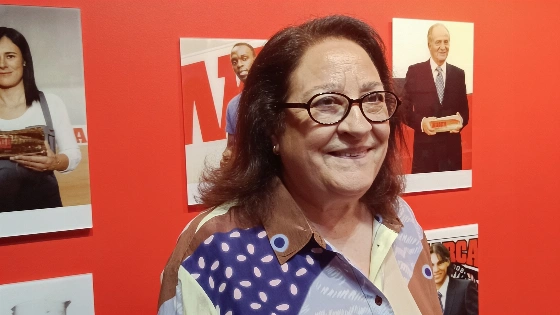
Nieves Moya, one of the first women to cover La Vuelta, tells how she fought for her place in cycling journalism. Her story shows the grit needed to break into a field that long shut women out, and how slow real change can be.
In 1986, when Nieves Moya tried to cover La Vuelta for the first time, organizers told her she couldn't ride in the race cars. The reason? They worried women might see male cyclists stop to urinate during the race. This wasn't a joke. It was a real rule that kept women away from the center of cycling coverage for years.
Now, nearly forty years later, Moya is still part of the sport. She has reported on 40 editions of La Vuelta and worked for France-Presse. Her career shows both her love for cycling and her drive to push past the sexism that shaped the industry. She remembers being one of the only women in the press room. At press conferences, her questions were often skipped. "In cycling, there has always been a lot of discrimination against women," Moya says.
In 2027, La Vuelta will start in Galicia, and the Vuelta Femenina will move to October, reflecting the ongoing institutional development of Spanish cycling.
Moya's first La Vuelta brought more than just exclusion. She and her colleague Miren Gasca had their shared suitcase stolen. They lost key work tools, including a typewriter. Even so, Moya kept going. These setbacks showed how much grit it took to survive in a world that didn't want women as equals.
Still, Moya found people who backed her. She points to the Orbea team and those around Domingo Perurena, who treated her and Gasca with respect. Pedro González from Televisión Española and José Luis Ibáñez Arana, then head of the Spanish Cycling Federation, also helped. Ibáñez Arana made Moya the Federation's press officer. She was the first woman to hold that job.
Cycling journalism has changed since then. Moya says teams are now more professional, but that has brought new hurdles. Press officers and agents control who gets to talk to riders. "Before, they were more approachable," she says. Still, she believes trust is what makes a good interview possible, even if some stories can't be told yet.
According to Cyclingnews and other leading outlets, debates about sexism and the visibility of women in cycling media have intensified in recent years. In 2026, women athletes and commentators publicly criticized advertising campaigns that, in their view, distracted from sporting achievements and reinforced stereotypes. This ongoing discussion highlights that issues of gender equality and access remain highly relevant in the cycling world.
Her work has brought her face to face with legends like Miguel Indurain and Lance Armstrong. Moya points out not just their drive to win, but also how they helped their teammates. She says there are stories from her years in the sport that she hasn't told yet. She hints at a book where she might finally share them.
Moya still covers cycling, but she hasn't yet reported on a major women's tour. She welcomes the growth of women's cycling and the chance for female athletes to compete and be seen for who they are. "I think it's wonderful that the girls can show themselves as they are," she says.
Moya's story shows how slow change has been in Spanish sports media. Her persistence forced open doors that had been closed to women for years. But her experience also makes clear how much work is left. The fact that such basic exclusions were normal not long ago is a sharp reminder: progress is real, but it often comes painfully slow. For anyone starting out now, Moya's path is both a warning and a sign of hope. The way forward is tough, but it can be done.