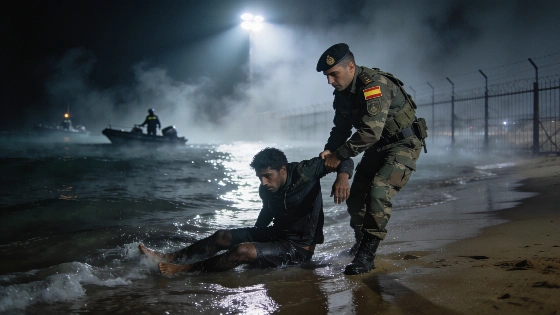
A group of migrants attempted to swim to Ceuta through dense fog. Spanish soldiers intervened when one man was left struggling in the water. The incident highlights ongoing risks at the El Tarajal border.
In the early hours on El Tarajal beach in Ceuta, Spanish soldiers carried out a critical rescue after a group of migrants attempted to reach Spanish territory by swimming from Morocco. The operation unfolded under thick fog, with patrol boats stationed offshore and powerful floodlights illuminating the coastline. As night fell, the military presence on the beach became less visible, but soldiers remained alert, stepping in only when swimmers' lives were at risk.
Shortly after 1:30 a.m., the silence was broken by cries for help from the water. Seven or eight men, some using makeshift flotation devices, struggled through the cold sea toward the shore. Most managed to reach land, but one man, exhausted and unable to move the final meters, was left behind in the surf. A soldier quickly entered the water, pulled him to safety, and checked his pulse on the sand. The man, though barely conscious, survived the ordeal. He was then assisted by another soldier as they waited for medical support.
The border fence atop the breakwater, which earlier in the day had seen movement in both directions, remained brightly lit throughout the night. Soldiers on the beach maintained a low profile, intervening only when the sea posed immediate danger to those attempting the crossing. The rescue highlights the ongoing tension and risks at this section of the border, where attempts to enter Ceuta by sea continue despite military patrols and adverse conditions.
For those who reach Ceuta, the future remains uncertain. Many face the difficult choice of staying in the enclave without a clear path to Europe or returning to Morocco. According to available data, at least 67 people have died trying to make this crossing. The situation at El Tarajal is part of a broader pattern of migration challenges along Spain's borders, where authorities must balance humanitarian response with border security. Recent weather changes, such as the sharp drop in temperatures and rain forecast for Spain this weekend, as reported in this update on changing weather conditions, can further complicate rescue operations and increase risks for those attempting dangerous sea crossings.
Ceuta, a Spanish enclave on the North African coast, has long been a focal point for irregular migration from Morocco. The El Tarajal beach area is particularly known for attempted crossings, especially when visibility is low or patrols are less intense. Spanish authorities have repeatedly emphasized the dangers of such journeys, with the military and emergency services regularly called upon to respond to life-threatening situations. The ongoing incidents underscore the persistent humanitarian and security challenges at Spain's southern border.