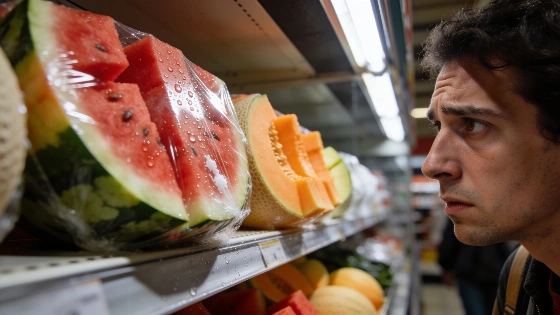
Pre-cut watermelon and melon sold in supermarkets across Spain have drawn attention after nutritionist Pablo Ojeda raised concerns about their safety on LaSexta’s Más Vale Tarde. Once cut, these fruits spoil faster than whole fruit, so careful refrigeration and handling matter, particularly in summer, when demand rises and warm conditions make temperature control more challenging.
Ojeda warned that sliced portions wrapped in plastic film may pose a risk if they are not kept properly chilled. Refrigeration helps preserve the cold chain, while prolonged exposure to room temperature can speed deterioration and raise food-safety concerns. Shoppers should check that pre-cut fruit is displayed in a chilled cabinet instead of relying on its appearance or packaging alone.
Handling is another concern. Touching or pressing exposed fruit can transfer contaminants, while repeated contact and time outside refrigeration can compromise safe storage. Consumers choosing pre-cut portions should avoid products left unrefrigerated and follow any storage instructions on the packaging.
Ojeda advises choosing whole fruit where possible and, when buying pre-cut melon or watermelon, selecting portions kept properly chilled. He also recommends seasonal produce. People with weaker immune systems, including children and older adults, can be more vulnerable to serious consequences from foodborne illness, making careful food handling especially impressive.
Summer events such as San Fermín, held in Pamplona each year from 6 to 14 July, provide seasonal context, information from Visit Navarra’s official tourism guidance. The festival’s dates set the scene, while the supermarket fruit warning concerns storage and handling at the point of sale. Further details on the event’s public-health arrangements appear in this report on public health measures during San Fermín.
Navarra recorded 249 cases of heat-related illness between 16 May and 30 September, 96% more than during the same period the previous year, Europa Press reported. The figure concerns heat-related conditions, not foodborne illness, and does not establish a link between cut fruit and the reported cases. In warm weather, keeping perishable food properly chilled remains a basic precaution for retailers and consumers.