A sold-out bullfight in El Puerto de Santa María brought together more than 10,000 spectators. Morante, Talavante and Ortega led the event, with Álvaro Núñez’s bulls praised for their noble character. The evening was marked by strong performances and crowd enthusiasm.
More than 10,000 people filled the bullring in El Puerto de Santa María on Saturday evening, as the city hosted one of the most anticipated bullfighting events of the season. The spectacle, featuring Morante de la Puebla, Alejandro Talavante and Juan Ortega, quickly sold out, with the audience responding enthusiastically to the matadors’ performances and the notably noble bulls from Álvaro Núñez’s ranch.
Morante, who entered the ring with his right hand bandaged after an injury in Palma days earlier, received a hero’s welcome. Despite his injury, he demonstrated remarkable commitment, especially in his second appearance, where he persisted against a difficult bull and managed to deliver a series of high-quality passes. However, his efforts with the sword were hampered by his injured hand, affecting the final result. The crowd, nonetheless, rewarded him with ovations and an ear for each of his bulls.
Talavante stood out in the fifth bout, facing a bull named Ponderoso that was met with calls for an indulto (pardon) from the crowd. The animal, weighing 485 kilos, showed little interest in the picador but displayed exceptional nobility and stamina in the final act. Talavante capitalized on these qualities, executing a fluid and elegant faena that earned him two ears. His earlier performance was less consistent, but the overall impression was one of technical skill and composure.
Juan Ortega brought his own artistry to the evening, particularly with his cape work. He faced the only bull of the night that showed signs of roughness, but in the final bout, Ortega opened with a dramatic kneeling pass and continued with a series of verónicas reminiscent of classic styles. Despite his efforts, the lack of spirit in his last bull limited the impact of his faena, and he left the ring to respectful silence after several failed attempts with the sword.
The bulls from Álvaro Núñez were carefully selected for the event, with most showing a cooperative and gentle temperament that allowed the matadors to shine. This approach, inherited from the breeder’s father, Joaquín Núñez del Cuvillo, has shifted the focus of such events toward the triumph of the toreros rather than the traditional contest between man and beast. The fifth bull was awarded a lap of honor after a strong petition from the public, underlining the crowd’s appreciation for the animal’s performance.
As the evening unfolded, the festive atmosphere in the stands was palpable, with many spectators swept up in collective excitement. The phrase “Quien no ha visto toros en El Puerto no sabe lo que es un día de toros” — attributed to Joselito el Gallo — was echoed by many, though some questioned whether the modern spectacle still matches the spirit of the past. The event’s popularity and the matadors’ reception highlighted the enduring appeal of bullfighting in the region, even as the nature of the contest evolves.
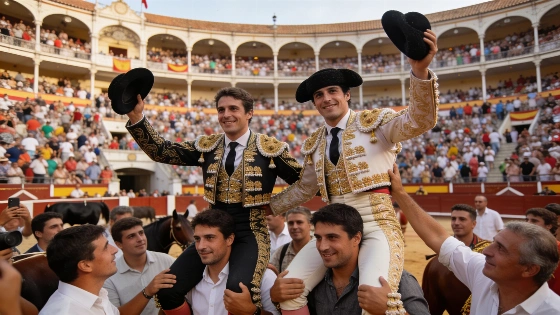
Morante and Talavante were carried out of the ring on the shoulders of supporters, marking a triumphant end to the evening. The official results recorded two ears for Morante, two for Talavante, and ovations for Ortega. The event’s success comes amid ongoing debates about tradition and change in Spanish bullfighting, a topic that has also surfaced in other areas of public life, such as the recent controversy over municipal hiring practices in Ripoll, which drew widespread attention and criticism, as detailed in this report on local government ethics.
For context, El Puerto de Santa María’s bullring is one of the most historic in Spain, known for its large capacity and vibrant summer events. Bullfighting remains a deeply rooted tradition in Andalusia, though it continues to face scrutiny and evolving public attitudes. The combination of celebrated matadors, carefully bred bulls, and a passionate audience ensures that such events remain a focal point of cultural life in the region, even as the definition of “a day of bulls” continues to shift with the times.