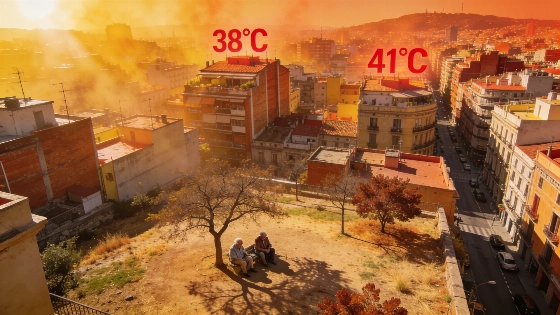
More than 10,000 deaths in the Barcelona metropolitan area have been linked to extreme heat over two decades. Vulnerable neighborhoods face the highest risk. Authorities now treat heat as a structural threat, not a rare emergency.
Extreme heat has claimed more than 10,218 lives in the Barcelona metropolitan area between 2002 and 2022, according to new findings from the Instituto Metròpoli. The study, presented to local officials and municipal experts, highlights a growing public health crisis as heatwaves become more frequent and intense. The most severe spikes occurred in 2003 and 2022, each year seeing around 1,000 deaths attributed to high temperatures. These fatalities represented nearly 10% of all deaths in those years, underscoring the scale of the problem.
Researchers analyzed mortality data alongside temperature records, focusing on days with extreme heat and the three days following. The results show that when temperatures exceed 35.5°C, mortality rates rise sharply. The impact is not evenly distributed: densely populated neighborhoods with poor housing conditions and limited green spaces are hit hardest. The study also found that women account for 60% of heat-related deaths, largely due to longer life expectancy, while 75% of victims are over 85 years old.
Heat is no longer seen as an occasional emergency in Barcelona. Instead, it has become a persistent structural risk, with higher temperatures lasting longer and peak periods shifting into July. The Instituto Metròpoli’s analysis links the highest mortality rates to the most vulnerable areas, where about 500,000 residents face heightened risk due to socioeconomic factors and inadequate urban infrastructure. The Heat Vulnerability Index (IVAC) developed by the AMB identifies nine municipalities with especially sensitive populations, totaling 520,000 people.
Protective factors include higher income, better education, and more vegetation in neighborhoods. Conversely, being a woman over 65, living in poorly built housing from the developmental boom, and a lack of green spaces increase the risk of dying during heat events. The study’s authors stress the need for targeted interventions, such as prioritizing vulnerable districts, investing in green infrastructure, and maintaining access to shade and water. AMB officials note that no single authority can address the heat crisis alone, calling for coordinated action across municipalities.
Additional risks are emerging as heatwaves coincide with drought and pollution, creating a multi-hazard environment. The mortality burden is increasingly complex, with overlapping threats compounding the danger for at-risk groups. The director of climate action services at AMB, Ana Romero, points out that the region now faces “extremely severe summers” that disrupt not only public health but also daily life, including schools and energy systems. The need for structural adaptation is urgent, as each additional degree of heat makes mitigation efforts more challenging.
Spain’s experience is not unique. Across Europe, authorities are grappling with the consequences of rising temperatures. For example, during the Tour de France, organizers were forced to shorten stages and deploy advanced cooling measures to protect athletes, as detailed in this report on heatwave responses in France. These developments highlight the growing need for cities to adapt to a hotter, more unpredictable climate.
Barcelona’s situation illustrates the urgent challenges facing urban areas as climate change accelerates. The findings from Instituto Metròpoli reinforce the importance of targeted policies and investments to protect the most vulnerable. As heatwaves become a regular feature of Mediterranean summers, the focus is shifting from emergency response to long-term resilience planning. The data also suggest that demographic trends—such as an aging population—will continue to shape the impact of extreme heat in the coming years. Local authorities are now under pressure to implement measures that can reduce mortality and safeguard public health as the climate crisis deepens.