Record heat has forced Tour de France organizers to shorten stages. Teams now rely on ice vests, cooling beds, and hydration tech to protect riders. The heat is testing both safety protocols and athletic performance.
Unprecedented heat has disrupted the opening week of the Tour de France, pushing organizers to shorten stages and teams to adopt advanced cooling strategies. With temperatures soaring, the focus has shifted from competition to survival, as riders and staff scramble to manage the risks of heat stress and dehydration.
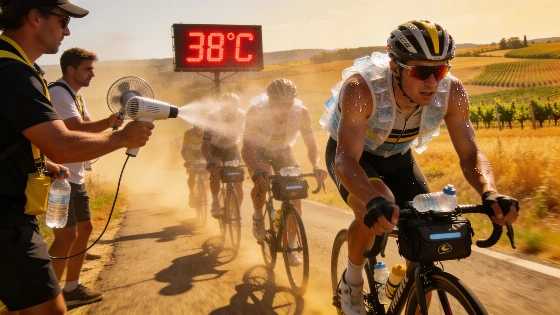
Teams have introduced a range of innovations to help athletes cope. Ice vests, chilled towels, and misting fans have become standard, while some squads have gone further—using smart mattresses that cool beds for riders like Pogacar and his teammates. The challenge is not just physical: medical experts warn that if the body cannot cool itself, blood thickens and kidney function declines, raising the risk of heatstroke. Ivana Cvijanovic, a researcher at IRD, recently highlighted in Scientific Reports that it is only a matter of time before the Tour faces a day of extreme thermal stress that will test current safety protocols.
Despite these efforts, resignation prevails in the peloton. Many accept that the Tour’s legend is built on enduring summer extremes. Imanol Erviti, director at Ineos, described how his team lined up to immerse their arms in cold water before the Barcelona time trial, a new tactic aimed at lowering core body temperature. Josemi Fernández, director at Caja Rural, pointed to another innovation: a smart urinal on the team bus that monitors riders’ hydration in real time.
Veteran Ion Izagirre noted that the first week’s heat has taken a toll, with riders relying on ice, cold drinks, and slushies to get through stages that often finish during the hottest part of the day. Javi Romo from Movistar, familiar with high temperatures from his native Toledo, warned of the dangers of overhydration, which can leave riders feeling bloated and uncomfortable.
Sports scientist Mikel Zabala from the University of Granada emphasized the importance of combining cooling methods. He cited menthol mouth rinses, which trick throat receptors and reduce perceived heat, and taurine, which increases sweating and lowers core temperature. Zabala also stressed the role of clothing: white gear, including shoes and helmets, helps prevent overheating. Some teams now use real-time body temperature sensors to track riders’ status during races.
Preparation is as crucial as in-race tactics. Training in high heat prompts the body to adapt by increasing red blood cell production, which can enhance endurance. Zabala described protocols where cyclists train in small, heated rooms or wear extra layers to simulate extreme conditions. Abel Balderstone, a Tour debutant, prefers sauna sessions for acclimatization.
With global temperatures rising, some suggest that moving stage start times or even changing the race calendar could become necessary. Erviti acknowledged that such decisions rest with organizers and commercial interests, but the pressure to adapt may grow. Balderstone and Zabala both noted that while adjusting schedules or shortening routes is possible in theory, the realities of modern cycling and audience expectations make such changes unlikely for now.
The Tour’s struggle with heat comes as other parts of Spain face their own challenges. For example, Málaga authorities recently began clearing a large caravan camp near Sacaba Beach, highlighting how extreme weather and housing pressures are intersecting in different regions. Details on that situation can be found in this report on the eviction of caravan residents amid the housing crisis in Málaga.
As the Tour de France continues, the combination of rising temperatures and the need for innovative cooling solutions is likely to remain a central issue. The event’s tradition of racing in July is deeply rooted, but the growing frequency of heatwaves may force organizers and teams to rethink long-standing practices. For now, survival strategies—both technological and physiological—are at the forefront of the world’s most famous cycling race.