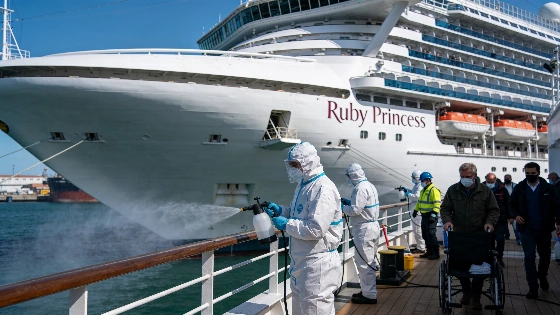
A norovirus outbreak affected more than 100 people on the Ruby Princess, which returned to San Francisco after a 20-day voyage. The ship underwent deep cleaning before its next departure. No hospitalizations were reported.
More than 100 people contracted norovirus during a 20-day voyage on the Ruby Princess, a cruise ship operated by Princess Cruises that departed from San Francisco and returned to the city this Thursday. The outbreak, which impacted both passengers and crew, was confirmed by the Centers for Disease Control and Prevention (CDC), as reported by Los Angeles Times. Of the 3,032 passengers on board, at least 102 experienced symptoms linked to norovirus, along with 23 out of 1,144 crew members. The majority of cases involved mild gastrointestinal issues, and none of those affected required hospitalization.
The Ruby Princess set sail from San Francisco on June 12, carrying around 3,000 passengers. According to a company spokesperson, the first reports of illness emerged during the journey. Upon the ship’s return, Princess Cruises implemented a thorough cleaning and disinfection process before the vessel departed again later that same day. The CDC continues to monitor such incidents closely, as norovirus remains a leading cause of gastrointestinal illness in the United States.
Norovirus is highly contagious and is recognized by the CDC as the primary cause of vomiting and diarrhea outbreaks nationwide. Each year, approximately 2,500 norovirus outbreaks are reported in the U.S., most often resulting from direct person-to-person transmission. The cruise industry has faced heightened scrutiny in recent months after several high-profile outbreaks, including both norovirus and hantavirus cases on ships operated by Dutch and British lines. These incidents have led to quarantines and, in some cases, fatalities.
Just yesterday, the World Health Organization (WHO) declared the end of the hantavirus outbreak on the HV Hondius cruise ship, which had been reported on May 25 and resulted in three deaths. The crisis concluded with the disembarkation of passengers at the port of Granadilla de Abona, and Spanish health authorities closed their management of the case on June 21 after all Spanish nationals, including ornithologist Ricardo Hevia from Cariño, completed quarantine with negative results.
Norovirus outbreaks have also affected cruise ships docking in Spain. On May 16, the Ambition cruise ship left A Coruña after an eleven-hour stop, following controversy over 21 active norovirus cases on board. The vessel, which had previously been confined in Bordeaux and denied entry to Ferrol, was eventually allowed to disembark its 1,670 passengers in the Galician city.
While the cruise sector continues to grapple with the challenges of infectious disease control, the recent Ruby Princess incident highlights the persistent risk of norovirus transmission in closed environments. For context, the intersection of travel, public health, and unexpected crises has also been explored in other sectors, such as the film industry’s depiction of sudden threats in New Mexico, as discussed in this feature on Hollywood’s approach to genre-blending stories.
Norovirus is a common concern for cruise operators worldwide due to its ease of spread in crowded settings. The virus can survive on surfaces for days and is resistant to many standard cleaning agents, making outbreaks difficult to contain once they begin. Passengers are typically advised to practice frequent handwashing and report symptoms promptly to minimize transmission. The CDC and cruise lines have established protocols for outbreak response, including isolation of symptomatic individuals and enhanced sanitation measures. These steps are crucial for protecting both travelers and crew, especially as cruise tourism continues to recover and expand in the post-pandemic era.