Hundreds of Spanish municipalities mobilize on Ceuta Day. Major rallies hit Madrid, Barcelona, and other cities. Political divisions sharpen as PP and Vox back the movement, while Podemos and Izquierda Unida abstain.
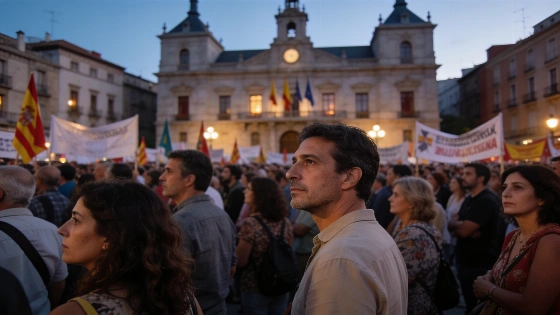
More than 260 Spanish municipalities are set to hold coordinated rallies in support of Ceuta, marking an unusually broad mobilization. Demonstrations will take place in city squares across the country at 20:00 on September 2, with Ceuta and the Canary Islands starting an hour earlier. The organizers want to make clear that Ceuta's crisis is now seen as a national issue.
In Ceuta, a single march will move from the Murallas Reales through the city center to the Plaza de los Reyes, in front of the Government Delegation. The route was agreed by the Federación Española de Municipios y Provincias (FEMP) and Foro Ceuta Siglo XXI, aiming to put Ceuta's demands directly before state officials.
FEMP officially called for nationwide rallies at 20:00 on September 2, acting on behalf of 8,132 Spanish municipalities.
Madrid will host two events: an official act at Plaza de Cibeles and a public gathering outside the Congress of Deputies. Over thirty municipalities in the Madrid region will also hold rallies, with Navacerrada choosing to demonstrate at noon. The capital's approach highlights the political stakes, as parties try to claim the cause of national unity, even as agreement remains out of reach.
Other major cities, including Barcelona, Valencia, Bilbao, Zaragoza, Valladolid, and Sevilla, will hold rallies at their main squares or city halls. In the Canary Islands, Las Palmas de Gran Canaria, Santa Cruz de Tenerife, and Telde will begin at 19:00, matching Ceuta's schedule. Organizers have spread the events across the country to show that Ceuta's situation matters from Galicia to Extremadura, Asturias to Andalucía.
The FEMP is leading the effort, with open support from Partido Popular (PP) and Vox. Podemos and Izquierda Unida have declined to participate, exposing a deeper split over how to respond to Ceuta's problems. Ceuta's president, Juan Jesús Vivas, has called for the movement to rise above party politics and focus on national solidarity, but the absence of key left-wing parties shows that unity is still out of reach.
The official FEMP initiative was launched after its president, María José García-Pelayo, visited Ceuta. Spanish media directly link the call for support to the PP, which currently controls FEMP. Meanwhile, the PSOE leadership has publicly distanced itself from the rallies, instructing local representatives not to participate, though some have joined independently.
This wave of demonstrations is the latest response to Ceuta's ongoing crisis. As reported earlier, Ceuta's leaders have repeatedly asked for national support as pressures mount. The current mobilization answers those calls, but also highlights the limits of cross-party cooperation in Spain's polarized climate.
Each city's rally is carefully planned: A Coruña's María Pita square, Oviedo's Plaza de la Constitución, Santander's city hall, and many others will serve as gathering points. Most events start at 20:00, emphasizing the organizers' goal of simultaneity and shared purpose. Still, the political context is hard to ignore. With PP and Vox leading and leftist parties staying out, the rallies risk turning into a partisan event rather than a unifying one.
Ceuta's president has asked for a mobilization "without party labels or ideologies," but the reality is more complicated. The crisis has become a test of whether Spain can unite around a common cause, even as party loyalties threaten to overshadow Ceuta's needs. The participation of over 260 municipalities shows how widely Ceuta's situation resonates, but the selective involvement of political groups reveals how fragile national consensus remains.
Spain's recent history is full of regional tensions and political splits, and the Ceuta rallies fit that pattern. While the demonstrations may look like a show of unity, the divisions are clear. The absence of Podemos and Izquierda Unida is not a minor detail—it signals that, even in moments of apparent solidarity, Spain's political landscape is still divided. Whether these rallies will lead to real support for Ceuta, or simply reinforce existing divides, remains to be seen.