The film 'El largo y cálido verano' brought Paul Newman and Joanne Woodward together on screen, marking a pivotal moment in their personal and professional lives. The production faced challenges, but its impact on cinema and the couple's future was significant.
When 'El largo y cálido verano' premiered, it was more than just another Hollywood release. The film not only showcased Paul Newman and Joanne Woodward together for the first time on screen, but also marked a decisive moment in their relationship. Their chemistry, already the subject of industry rumors, became undeniable during filming, setting the stage for a new chapter in both their careers and personal lives.
The production assembled a remarkable cast, including Anthony Franciosa, Lee Remick, Angela Lansbury, and Orson Welles. Directed by Martin Ritt, known for 'Hud' and 'Norma Rae', the film drew from several William Faulkner stories about the Spones family, with the screenplay adapted by Irving Ravetch and Harriet Frank Jr. The project quickly gained attention, especially in Europe, and was selected to compete for the Palme d'Or at Cannes. While it did not win the top prize, Paul Newman received the award for Best Actor, further cementing his rising status in international cinema.
Behind the scenes, the personal lives of the lead actors were in flux. Newman, still married to Jackie Witte and father to three children, found himself at a crossroads as his relationship with Woodward deepened. The couple's growing bond was no longer a secret by the time Newman was filming 'Somebody Up There Likes Me'. Despite the potential for scandal, the transition was handled quietly, with Witte eventually granting Newman a divorce. This allowed Newman and Woodward to marry in early 1958, just as Woodward's career was reaching new heights following her acclaimed performance in 'Las tres caras de Eva'.
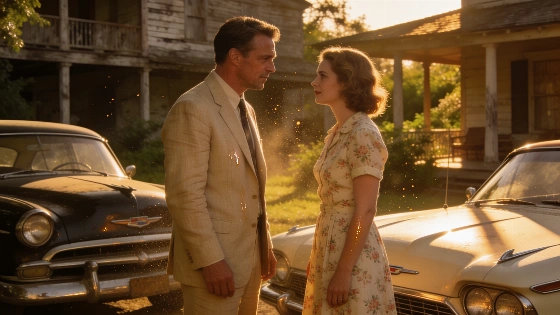
The narrative of 'El largo y cálido verano' centers on Ben Quick, played by Newman, a drifter with a notorious family reputation who arrives in Mississippi seeking work. He encounters Will Varner, portrayed by Welles, and becomes entangled in the ambitions and rivalries of the Varner family. The dynamic between Ben and Clara Varner, played by Woodward, drives much of the film's tension, with Angela Lansbury later noting the palpable connection between the two leads during production.
Filming conditions in Louisiana proved challenging, particularly for Orson Welles. The intense heat caused repeated issues with his makeup and prosthetics, leading to multiple retakes. Welles, then 42 but playing a character nearly two decades older, reportedly clashed with director Martin Ritt, though he later spoke fondly of his younger co-stars and the overall experience. The presence of so many emerging talents from the Actor's Studio created a unique atmosphere on set, blending established and rising stars.
Initially, Eva Marie Saint was considered for the role of Clara Varner, but Woodward's growing reputation and recent accolades shifted the decision in her favor. The timing proved fortuitous: shortly after filming, Woodward won the Oscar for Best Actress, and her marriage to Newman became a celebrated union in Hollywood. Their partnership, both on and off screen, would go on to define an era of American cinema.
For those interested in revisiting this pivotal film, 'El largo y cálido verano' is currently available on RTVE Play for a limited period. The movie remains a testament to the enduring appeal of its cast and the lasting impact of a production shaped by both artistic ambition and personal transformation.
Contextually, 'El largo y cálido verano' stands as a significant example of mid-20th-century American cinema, reflecting the era's evolving attitudes toward celebrity relationships and the blending of personal and professional lives. The film's reception in Europe, particularly at Cannes, highlights the international reach of Hollywood productions during this period. The collaboration between Martin Ritt and his cast, especially with talents like Newman and Woodward, contributed to a legacy that continues to influence film studies and popular culture. The availability of the film on platforms like RTVE Play underscores its continued relevance and the enduring fascination with the stories behind classic cinema.