A deputy pulled out pepper spray in Spain's Congress, setting off evacuations and sending staff for medical help. The incident laid bare the sharp divides and showmanship now running through Spanish politics.
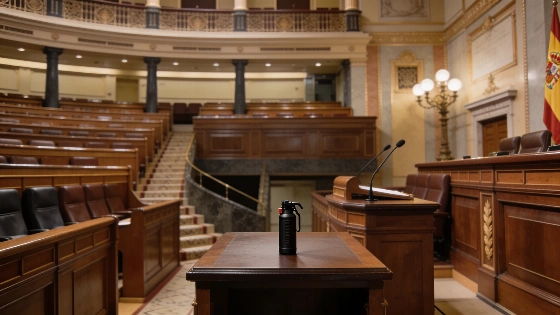
Medical teams rushed into Spain's Congress after a sharp, burning smell forced several offices to close. About a dozen people needed help. The cause: a can of pepper spray, shown off earlier in the chamber by Ana Vázquez, a Partido Popular (PP) deputy. Her move turned a political point into a real emergency.
It started when Vázquez, who often targets the Interior Minister, pulled out the spray during a heated session. She called it the “basic school supply” now needed in Ceuta for self-defense against “assailants.” This was more than a stunt. Chamber president Francina Armengol ordered Vázquez to leave and hand over the can, saying it was a weapon and banned inside. PP deputies shouted and waved, urging Vázquez to resist. According to EFE and El Español, Armengol cited Article 101 of Congress rules and the arms registry, which classifies pepper spray as a weapon inside the building, even if it is legal to buy elsewhere.
After the incident, a strong irritant odor spread from a bathroom in the Ampliación III area to party offices and even the cafeteria, affecting a visiting Mauritanian delegation.
Within half an hour, the fallout was clear. Police blocked off parts of the complex after a Mauritanian delegation complained about a harsh smell in a bathroom near party offices. The odor spread to Vox’s offices and the cafeteria. Official sources said a dozen staff suffered eye irritation and vomiting and needed medical care. At first, the PP denied any link. Two hours later, a party press adviser admitted he had released the spray at Vázquez’s request, saying she told him to “wash it.” Spanish media, including El Constitucional, reported that the problem was not the spray’s retail status, but its classification as a regulated weapon inside Congress.
The session, meant for routine government control, quickly spun out of control. Even before the spray, the opposition was on the attack. Vox’s Pepa Millán accused Prime Minister Pedro Sánchez of running a “regime of terror” and plotting election fraud. PP’s Miguel Tellado called the Interior Minister a “hitman” and “a minister of Spain who hates Spain.” Vázquez accused the minister of “defending assailants” in Ceuta and “laughing at Spaniards.”
Armengol’s order to expel Vázquez only fueled the uproar. PP deputies stood and cheered, while a few stayed seated, looking uneasy. Party leader Alberto Núñez Feijóo backed Vázquez in the corridors, blaming Armengol for making things worse. Another PP deputy, Jaime de Olano, called Armengol an “activist of sanchismo.” Armengol shot back, calling him a “coward” and pointing out he had no right to reply.
Expulsion from the chamber is a disciplinary measure imposed by the president for the duration of the session and does not entail the loss of a deputy's mandate. This distinction was emphasized by several Spanish outlets to clarify the legal consequences of the incident.
Vázquez took to the media, calling her expulsion another injustice. But the pepper spray incident overshadowed everything. The fumes forced closures and medical calls, turning a gesture into a real hazard. The PP’s shifting story—first denying, then admitting what happened—made the scene look even more farcical. EFE and Democrata reported that Vázquez claimed the can was empty and said she would repeat the act “as many times as necessary,” showing how the fight over security and rules is far from over.
The clashes kept coming. The opposition brought up unrelated claims about a lawyer tied to the Socialists and alleged threats to a judge in Badajoz. De Olano called the government a “probably criminal gang.” Jaime de los Santos circled back to the pepper spray, saying women in Ceuta now arm themselves because of a “government-enabled invasion.” He accused the government of turning Spain into a “paradise for human trafficking” and called ministers “criminals” who ignore borders and laws. De los Santos insisted his words came from fear, not hate.
By the end of a day filled with insults, accusations, and real danger, most Socialists had stepped back. The noise faded, but the message was clear: Spain’s parliament has become a stage for outrage and spectacle. The pepper spray didn’t just disrupt the session. It showed how far things have slid, with stunts and provocation now spilling into real life.