Peugeot revives its GTI badge for the electric era with the E-208 GTI, packing 281 CV and a chassis tuned by Peugeot Sport. The result is a compact that excites on twisty roads but leaves drivers wanting more when the battery runs low.
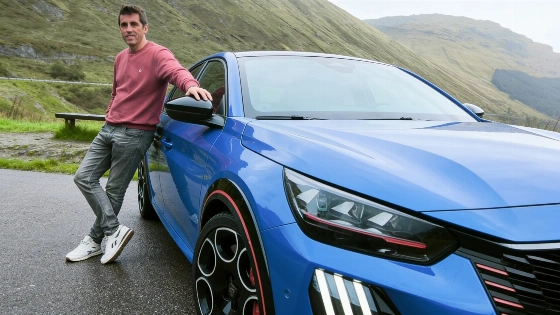
Rain spatters the tarmac outside Glasgow. The E-208 GTI sits low, ready. Peugeot has brought back the GTI badge, but this time it’s all-electric. The car packs 281 CV and a chassis sharpened by Peugeot Sport. It launches hard, grips tight, and feels alive. But the battery can’t match the car’s appetite for fun.
Look under the skin. The E-208 GTI uses a 54 kWh battery (51 kWh usable) and the M4+ motor. These are shared with other Stellantis models: Opel Mokka, Corsa GSE, Abarth 600, Alfa Romeo Tonale Veloce Elettrica, and Lancia Ypsilon HF. All get the same 207 kW (281.52 CV) and 345 Nm of torque. Peugeot Sport’s team didn’t stop there. They took lessons from the WEC and built a chassis that feels different from its siblings.
Independent reviews confirm the E-208 GTI features a mechanical limited-slip differential, widened track, lowered suspension, and upgraded brakes, distinguishing it from standard Stellantis EVs.
The suspension is far from generic. Up front, there’s a pseudo McPherson strut, a 31 mm stabilizer bar, and custom dampers with hydraulic stops. The rear uses a torsion beam with a 17 mm stabilizer. Peugeot widened the track by 56 mm at the front and 28 mm at the rear. You feel these changes right away. On wet Scottish roads, the E-208 GTI stays planted. It gives you confidence, even when the weather turns nasty.
Brakes come from Alcon. Four-piston calipers and 355 mm ventilated discs handle the front. The rear gets 268 mm discs. Stopping power is strong. The pedal, though, feels soft. It lacks the bite you expect in a true hot hatch. That’s the car’s biggest dynamic flaw. Still, the brakes don’t fade, even after hard use.
Steering tells a different story. The rack is quick and precise. There’s a mechanical limited-slip diff on the front axle. This setup gives the E-208 GTI an old-school, direct feel. Rivals like the Alpine A295 GTS use electronic systems. Peugeot’s mechanical diff lets the car rotate naturally through corners. Drivers get real feedback. It’s rewarding.
According to several authoritative automotive publications, the E-208 GTI weighs approximately 1,530–1,535 kg and consumes around 15.9–17.1 kWh/100 km in real-world tests, which helps explain why its dynamic character is balanced by a relatively modest real-world range.
Inside, the i-Cockpit layout splits opinion. The small, low steering wheel means you have to pick: comfortable hands or a clear view of the dials. Materials feel good. Red accents and sports seats add some flair. Still, the cabin could use more GTI-specific details to match the car’s intent.
On the move, the E-208 GTI acts like a real hot hatch. It’s lively and quick to respond. The M4+ motor, built in Tremery, France, uses a custom electronic management system from Peugeot Sport’s racing work. Throttle response is sharp. Most electric cars feel numb by comparison. Not this one. The E-208 GTI keeps you engaged.
But the electric setup brings a catch. Official range is 352 km on Michelin Pilot Sport 4S tires, or 375 km with Hankook Ventus S1 Evo3s. Push hard on a twisty road, and the battery drains fast. You’ll be looking for a charger before long. The pack has 17 modules and a 400-volt setup, tuned for performance. Still, spirited driving eats into the range quickly.
Against other electric compacts, the E-208 GTI stands out for its handling and focus. Peugeot put in extra work. This isn’t just a bigger motor in a standard shell. For a closer look at how other brands are tackling electric hot hatches, recent coverage of new electric SUVs entering the Spanish market shows the competition is heating up.
Peugeot’s electric GTI isn’t just nostalgia. The E-208 GTI proves you can have sharp handling and real driver fun without petrol. The battery, though, cuts the party short. For now, it’s a car that gives a real rush. Just not for long. The next leap will have to come from battery tech, not just clever chassis work.