Tadej Pogacar defended the red jersey in the Vuelta a España after a tense stage in Manosque. Wout van Aert and Ethan Hayter challenged, but Pogacar’s late move kept him in the lead. The mountain stages ahead could prove decisive.
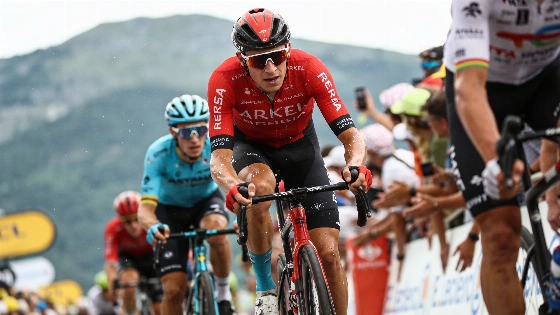
Tadej Pogacar’s determination to keep the red jersey in the Vuelta a España was put to the test immediately after his opening time trial win in Monaco. Despite suggesting that the jersey could change hands in the following stage, Pogacar’s actions on the final climbs in Manosque told a different story. He neutralized a late attack from Wout van Aert and then sprinted to finish third, ensuring he remained the overall leader as the race heads into the mountains.
The stage was shaped by a calculated move from Ethan Hayter, who had narrowly missed out on the time trial victory by just nine hundredths of a second. Hayter joined the day’s breakaway with a clear goal: to claim bonus seconds at the intermediate sprint in Gréoux les Bains. His effort paid off as he crossed first, collecting six seconds, while Van Aert took four. This put Hayter in mathematical contention for the red jersey, but the final outcome would depend on the finish in Manosque.
Van Aert, sitting just nine seconds behind Pogacar in the general classification, was also in a strong position to take the lead if he could win the stage. The finish, favoring riders with classic one-day race profiles, made Van Aert and Mads Pedersen the main favorites. Both their teams, Visma and Lidl, worked to control the peloton and chase down the breakaway. However, Hayter managed to stay clear until just before the final sprint, forcing the favorites to adjust their tactics.
With two kilometers to go, Van Aert launched a decisive attack, aiming not only for the stage win but also for the red jersey. Pogacar responded immediately, closing the gap himself—a move that highlighted the ongoing rivalry between the two, especially after Van Aert’s victories over Pogacar in previous seasons. The peloton caught both attackers, setting up a new sprint. Visma then played their second card, Matthew Brenan, who took the stage win ahead of Pau Miquel, with Pogacar crossing the line in third and keeping the leader’s jersey.
The stage also saw Koen Bouwman secure the first mountain jersey after cresting two third-category climbs, while Spanish riders Diego Uriarte and Sinuhé Fernández contributed to the breakaway in recognition of their teams’ invitations. The dynamics of the race, with bonus seconds and tactical attacks, kept the general classification in flux, but Pogacar’s consistency and ability to respond to threats have made him the rider to watch as the Vuelta heads into the high mountains of Font Romeu and Andorra.
Looking ahead, the next stages are expected to be decisive, with summit finishes and challenging terrain likely to test the current hierarchy. The Vuelta a España often produces unpredictable scenarios, as seen in other major sporting events in Spain, such as the dramatic bullfight in Málaga where unexpected turns changed the outcome for the participants. For more on how sudden developments can impact sporting competitions, see this report on a recent bullfight in Málaga.
The Vuelta remains one of cycling’s most demanding Grand Tours, with its mix of time trials, mountain stages, and unpredictable weather. Riders like Pogacar, Van Aert, and Hayter bring international attention to the event, while Spanish teams and riders continue to play key roles in shaping the race. The coming days will reveal whether Pogacar can maintain his grip on the red jersey or if new contenders will emerge from the challenging mountain stages ahead.