The Partido Popular calls for urgent EU intervention after thousands cross into Ceuta. The party blames the Sánchez government for negligence and claims Spain’s southern border is left exposed. Tensions with Morocco add to the crisis.
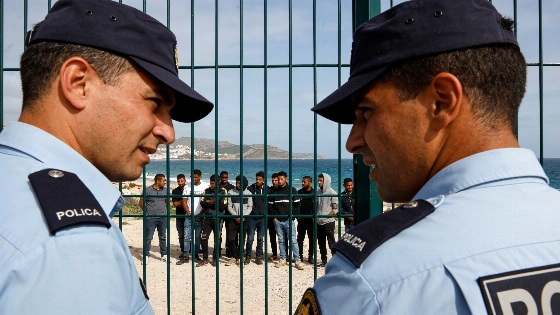
Spain’s Partido Popular (PP) is pressing the government and the European Union for urgent action after what it describes as an unprecedented breach of the southern border in Ceuta. The party accuses Prime Minister Pedro Sánchez of ignoring intelligence warnings and leaving the city vulnerable to a mass entry of irregular migrants. PP leaders now call the situation a direct threat to both Spanish and European territorial integrity. According to a European Parliament briefing, the crisis peaked on July 30 and 31, 2026, when about 80,000 people crossed from Morocco into Ceuta in just two days—a scale not seen before in Spain or at any EU border.
PP representatives in the European Parliament have sharply criticized the government’s response. Alma Ezcurra, the party’s vice-secretary for sectoral coordination, called it negligence and surrender. She described ongoing fear in Ceuta, daily assaults on police, and reports of sexual violence against migrant women, arguing these are not isolated incidents but the result of a government unwilling to face the situation at the border. Official figures from the European Parliament put the death toll during the crisis at a minimum of 72, including drownings and deaths at the border fence. Some reports estimate the number of deaths at over 150.
By August 2, most of those who crossed into Ceuta during the crisis had already returned to Morocco, according to European Parliament data.
Dolors Montserrat, secretary general of the European People’s Party and vice president of the PPE Group, intensified the criticism, saying Sánchez was fully aware of the risk, had received warnings from police and intelligence services, and chose to ignore them. Montserrat said the president of Ceuta repeatedly warned Madrid, only to be told to stop raising concerns. She noted that even after the entry of 80,000 irregular migrants on July 30, the government remained silent, while the crisis continued on the ground with thousands still on the streets, daily clashes with police, and children unable to attend school. According to Spanish government officials, as of August 10, 5,321 people had returned to Morocco and 90 withdrew their asylum requests, but the exact number remaining in Ceuta was not disclosed. European and media sources estimated that between 3,000 and 5,000 people were still in the city in early September, with reception centers overwhelmed.
Javier Zarzalejos, chair of the European Parliament’s Committee on Civil Liberties, described the events as a hybrid attack on Spain’s sovereignty, not just a migration issue. He questioned Morocco’s cooperation, pointing out that Rabat has not authorized the repatriation of the bodies of 140 people who drowned during the mass entry. Zarzalejos argued that the return of 70,000 people to Morocco shows the border is under Moroccan control, not evidence of partnership. Moroccan authorities, according to Al Jazeera, have denied any involvement in organizing the mass entry, despite ongoing disputes between Spain and Morocco and growing pressure within the EU.
The PP claims Morocco is deliberately using migration flows as leverage against Spain, a tactic discussed in other contexts, as seen in this earlier breakdown. The party insists the EU should treat the Ceuta crisis as seriously as similar incidents on the borders of Poland, Finland, or Lithuania, regardless of which country is on the other side. In response to the crisis, Spain formally requested emergency EU funding on August 24 to expand reception capacity and reinforce border infrastructure. The EU later approved €114.7 million in emergency assistance.
Frontex reported that irregular migration along the Western Mediterranean route increased by 34% from January to August 2026, not including the July surge in Ceuta. Meanwhile, Spanish statistics show that 4,076 people entered Ceuta by land in the first eight months of 2026—more than double the figure for the same period in 2025. These numbers highlight the ongoing migration pressure on Ceuta even after the peak crisis.
For the PP, the issue goes beyond Ceuta. The party calls for full implementation of the EU Migration and Asylum Pact and demands equal protection for all European borders, whether the threat comes from Russia or Morocco. Montserrat summed up the party’s position by saying Ceuta must be defended, not abandoned or negotiated away.
The dispute has deepened the divide between the Spanish government and the main opposition over border security and national sovereignty. The PP’s accusations of negligence and capitulation reflect wider concerns about Spain’s ability to control its borders and the EU’s willingness to support member states when migration is used as a tool of pressure. The government’s silence and lack of decisive action, as described by the opposition, risk undermining public confidence and could set a precedent for future crises. The Ceuta episode has exposed the vulnerability of Europe’s southern border and the need for a coordinated response that addresses the realities on the ground.