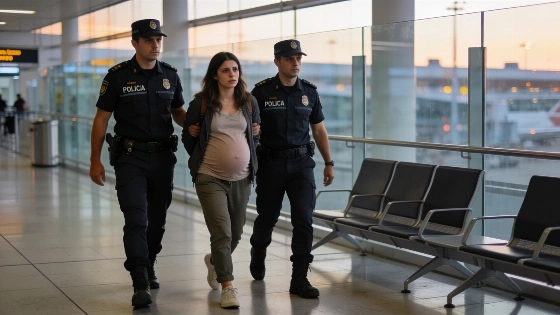
A 20-year-old pregnant woman arriving from São Paulo was arrested at Madrid Barajas after police discovered 69 cocaine packets hidden inside her body. The case exposes the extreme risks faced by drug mules and the growing pressure on airport security.
Spanish police at Madrid Barajas Adolfo Suárez airport arrested a 20-year-old woman who had just arrived from São Paulo after she admitted to carrying drugs inside her body. The woman, who is two months pregnant, expelled 16 packets of cocaine at the airport. Doctors later found 53 more packets inside her at the hospital, bringing the total to 69.
The fact that the woman was pregnant highlights how criminal networks target people in vulnerable situations. Both her health and that of her unborn child were put at serious risk. Police say cases like this are becoming more common as traffickers look for couriers who are less likely to refuse or draw suspicion.
The incident occurred at approximately 1:00 a.m. on September 9 in Terminal 1, following a selective passenger check that led to the woman's confession and immediate medical intervention.
According to the National Police, officers noticed the woman was nervous and showed certain physical signs after her flight landed at 1 a.m. on September 9 in Terminal 1. She quickly admitted she was pregnant and carrying a large number of packets internally. Police tested the expelled packets and confirmed they contained cocaine, then took her to a hospital for further medical care and removal of the remaining packets.
Once doctors confirmed she was stable, police arrested her for a public health offense. The case shows the ongoing difficulty Spanish authorities face in stopping drug mules—people who often act out of desperation or under pressure from organized crime. Spanish media, citing police sources, have confirmed the details of the case, including the woman's age, pregnancy, and the number of packets.
Madrid Barajas and other Spanish airports remain major entry points for drugs coming from South America. Traffickers often use couriers in vulnerable situations, despite increased airport security. Carrying drugs internally is dangerous: if a packet breaks, it can cause a fatal overdose, and the risks are even higher during pregnancy.
Recent reports indicate that on September 8, 2026, Spanish police dismantled a major illegal financial infrastructure supporting large-scale cocaine traffickers, arresting 21 people and seizing assets worth around 20 million euros. This operation is part of a broader crackdown targeting both logistics and financing of drug networks across Spain.
Reuters
Other recent cases in Spain have also involved people in vulnerable positions being drawn into criminal activity, such as a reported inheritance dispute in Madrid where family members were at the center of a legal case. These stories show a pattern: those with the least power often end up taking the biggest risks for criminal networks, whether for drugs or money.
Police noted that the drug packets were shaped to fit inside the body, making them harder to detect. Spain's role as a gateway for narcotics into Europe continues to push traffickers to use more dangerous methods. While authorities have improved their ability to catch these attempts, the social and economic pressures that drive people to become couriers remain. Until those issues are addressed, cases like this are likely to continue.