Pedro Sánchez’s visit to a quiet Huelva town drew more attention for its armored motorcade and local protests than for its official agenda. Residents greeted the president’s convoy with open hostility, exposing the gap between government image and street sentiment.
When Pedro Sánchez’s convoy entered San Juan del Puerto, it was hard to miss. Ten black official cars, a Falcon jet, and a Super Puma helicopter brought the president to a town of just 10,000 people. But the loudest sounds weren’t engines—they were shouts of “¡perro!” and “¡cobarde!” from residents lining the streets.
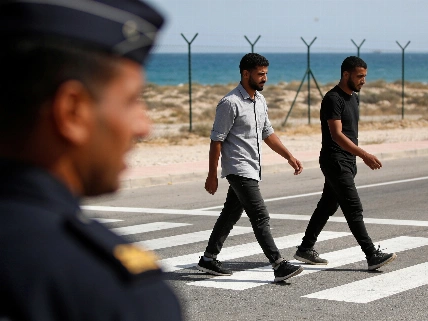
The visit was supposed to be routine, but it quickly became a clear example of how government protocol can clash with local feeling. Videos and photos shared online showed a security detail more typical of Spain’s biggest cities, looking out of place in this modest Andalusian town. The armored procession didn’t shield Sánchez from the anger of locals as he passed by. According to official sources, Sánchez was in Huelva on September 17, 2026, to present the Valle Andaluz del Hidrógeno Verde project in Palos de la Frontera and to visit an area affected by fire in Niebla.
Local media report that Sánchez's stop at the Centro Sociocultural Jesús Quintero was the first institutional visit by a Spanish head of government to San Juan del Puerto in the democratic era.
Inside the Centro Sociocultural Jesús Quintero, the event was tightly managed. Sánchez, joined by mayor Rocío Cárdenas and Andrea Quintero (daughter of the late journalist), signed the book of honor and reviewed a project to preserve and digitize more than 10,000 hours of Quintero’s audiovisual work. The official schedule also included a visit to the Onuba project, part of the Valle Andaluz del Hidrógeno Verde, an industrial initiative led by Moeve in Huelva. Independent reports say the Onuba phase is the start of what could become Europe’s largest green hydrogen project, aiming for up to 2 GW of electrolysis capacity and more than 1 billion euros in investment.
Still, these official milestones were overshadowed by the images of a president surrounded by security and met with open rejection outside. The government’s public calendar did not list the San Juan del Puerto stop as a separate agenda item, a detail noted by several Spanish news outlets in discussions about whether the visit was planned or improvised.
Moncloa’s communications team has worked to present Sánchez as a leader close to ordinary Spaniards. The reality in San Juan del Puerto looked different. His public appearances now often happen in controlled settings, with selected guests and heavy police presence. The contrast between the government’s message and what happened in Huelva was sharp: a leader present in person, but separated from the real reactions on the street.
The green hydrogen initiative launched in Huelva is positioned by industry sources as a major industrial and energy project, aiming to make the Andalusian Green Hydrogen Valley the largest of its kind in Europe. The project’s first phase, Onuba, began in Palos de la Frontera and is expected to play a key role in Spain’s renewable energy strategy.
As reported by Google/SpainAuto, the day’s events highlight a growing tension between official Spain and the daily experience of its citizens. Relying on security and protocol may protect the government’s image for now, but it also risks deepening mistrust. When the lasting image of a presidential visit is a convoy met with insults, it shows a political climate where public sentiment can’t be managed by barriers and black cars alone.