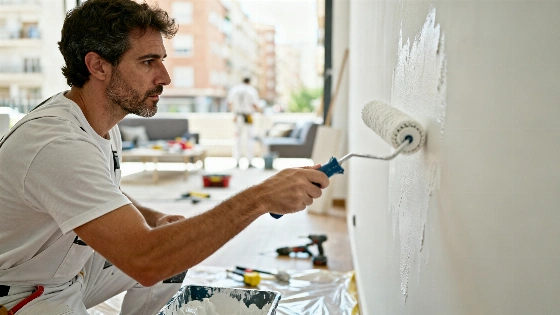
How Much Does a Professional Painter Actually Earn per Day in Spain in 2026. In 2026, the cost of hiring a painter in Spain depends not only on the region, but also on the type of payment, materials used, and additional conditions. We explain how daily rates are calculated, why the final bill may be higher than expected, and what to look for in the estimate.
Arranging for an apartment or house to be painted in Spain is no simple task if you don’t know the real rates and nuances. In 2026, the cost of a painter’s services depends on many factors: region, payment format, need for materials, and even the time of day the work is performed.
For hourly payment, rates in rural areas or for large-scale jobs are usually 15–18 euros per hour. In major cities—Madrid, Barcelona, Bilbao—the price rarely drops below 20–25 euros per hour. This amount covers not only labor, but also expenses for tools, transportation, insurance, and the painter’s profit.
Day rate and what it includes
For a full working day (8 hours), a painter in Spain in 2026 typically charges from 120 to 200 euros. This is the base price, which covers only the labor. If the painter supplies paint, filler, and other materials, the total increases by 20–30%. It’s important to clarify in advance what’s included in the estimate to avoid unpleasant surprises.
Extra charges and hidden costs
Urgent jobs, night shifts, or work on weekends or holidays can significantly increase costs—in these cases, the rate can rise by up to 50%. If the site is more than 15–20 km from the workshop, a mileage surcharge is usually added, about 0.25 euros per kilometer. Another factor is work at height: if scaffolding or safety systems are needed, the hourly rate increases due to risk and extra time required.
How to read an estimate and avoid overpaying
Before signing a contract, it is important to understand how payment will be calculated: per hour, per day, or for the entire job. The estimate should clearly separate the cost of labor and materials, as well as specify any possible extra charges for travel, night work, or challenging conditions. This approach allows you to compare offers from different contractors and avoid overspending.
In practice, even for the same profession, the final amounts in estimates can differ significantly. The reason is different calculation methods, the inclusion or exclusion of materials, and additional services. As noted by Talent24h, transparency of terms is key to customer peace of mind.
What else is important to know
If the work is done under an administrative scheme (payment for actual hours or days worked), it is worth agreeing in advance on the estimated number of shifts. This will help avoid situations where the final amount unexpectedly increases. It is also important to clarify whether work at height or under difficult conditions will be required—such details affect the price as much as the region.
For comparison: errors in calculating employment history can cost hundreds of euros in pension, as illustrated in a recent analysis on the topic of the importance of verifying employment periods. For household services, attention to detail in the estimate is equally important.
As a result, in Spain in 2026, the average freelance painter's rate is €15–25 per hour or €120–200 for a full working day. The final amount depends on the region, scope, need for materials, location, and complexity of the job. The optimal approach is to request a detailed estimate and not hesitate to clarify all details before work begins.