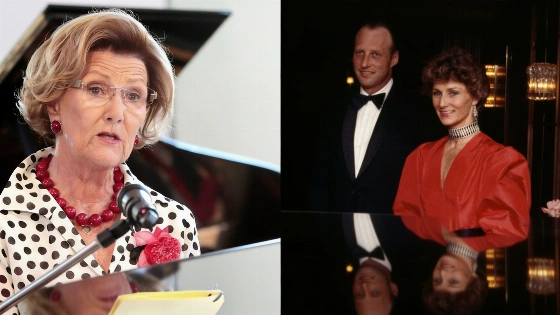
Princess Astrid of Norway has died at 94, just two days after attending her brother King Harald’s funeral. The royal household confirmed her passing, marking a rapid succession of losses for Norway’s monarchy.
Norway’s royal family is mourning a second loss in less than two weeks. Princess Astrid, sister of the late King Harald V, died at 94 in Oslo, only two days after she attended her brother’s state funeral. The palace released a brief statement confirming her death and the family’s grief. Reuters reported that the royal household announced her passing on September 11, 2026, and described the family’s sorrow.
Fourteen days earlier, the throne passed to Haakon VIII after King Harald died at 89. Princess Astrid, who had struggled with heart problems and received a pacemaker earlier this year, made her last public appearance at Oslo Cathedral for her brother’s funeral. Her health prevented her from joining the royal cortege, but she attended the private farewell at Akershus Fortress, where King Harald was buried. BBC and Reuters both reported that the funeral took place on September 9, 2026, and that Haakon VIII became king immediately after.
Sveriges Radio also confirmed Princess Astrid’s death, citing an official statement from the Norwegian royal family, further strengthening the factual basis of the news.
The official statement from the royal household, signed by Astrid’s five children and their families, described her as a steady presence for both King Olav and King Harald. They remembered her loyalty and the care she showed to those around her. The message ended with a note of gratitude, reflecting the close family ties that shaped Astrid’s life. Several Scandinavian media outlets reported that the palace said the king received the news "with deep sorrow," underlining the weight of the loss.
Haakon VIII, now king, spoke publicly about his aunt’s role in the family. He recalled that Astrid, at 22, became first lady after their mother, Princess Märtha, died. For fourteen years, Astrid represented the monarchy at official events, focusing on social inclusion and support for vulnerable groups. Haakon praised her candor, commitment, and the support she gave to King Harald and the family, saying her absence will be deeply felt. BBC noted that Astrid often represented the monarchy at public events, especially when other family members could not attend.
In her final weeks, Princess Astrid had private hospital visits and made a rare public appearance at the royal palace’s chapel of rest, where she was photographed alone in mourning. Despite her age and declining health, she remained active in public life until recently, attending the 50th anniversary of the Norwegian Dyslexia Association and the centenary of the Blindern and Vinderen health association in May. The palace has ordered flags at half-mast until her funeral, which has not yet been scheduled.
In recent years, Princess Astrid’s declining health limited her participation in royal events, and during the days of King Harald’s funeral, she appeared in public but did not take part in all segments of the mourning procession.
Born in 1932, Astrid lived through the Nazi occupation as a child and spent part of World War II in exile in the United States. She married Johan Martin Ferner, an Olympic sailor, in 1961 and had five children. Ferner died in 2015. Astrid’s public service spanned decades, and she was known for her humor, dedication, and sharp memory.
Her death comes as European monarchies face generational change and renewed public attention. The quick succession of royal funerals in Oslo has put a spotlight on the resilience of Norway’s royal house. As reported earlier, the loss of long-serving public figures often leads to reflection on continuity and the personal costs of public duty.
Princess Astrid’s life was shaped by responsibility in difficult times and her efforts to keep daily life steady within the royal household. Her story—marked by exile, duty, and personal loss—reflects the challenges faced by European royalty today. With Haakon VIII now on the throne, the Norwegian monarchy moves forward without one of its most reliable members. The palace’s response and the family’s public gratitude show a focus on stability, but the emotional impact of these changes is clear.