Begoña Gómez faces trial for alleged influence peddling and misappropriation, but Madrid’s prosecutor has called for her acquittal. The investigation found no personal gain, no harm to the university, and no irregularities in the creation or operation of the Complutense chair.
Begoña Gómez’s legal fight just shifted. Madrid’s public prosecutor has told court number 41 that Gómez should be acquitted. The prosecutor’s report is blunt: there’s no sign Gómez got rich, no money lost by Universidad Complutense, and no rules broken in setting up or running the university chair at the center of the case. The Spanish prosecutor’s office says the facts uncovered do not add up to a crime. There’s no civil liability either.
The case started with the creation of a university chair at Complutense. This was agreed at a pandemic-era meeting in La Moncloa with the rector, then approved by the vice-rector under normal rules. The prosecutor checked the process. Every step followed legal and university protocols. No irregularities. No sign of pressure or favors. The chair’s software platform cost €113,000. The prosecutor says neither Gómez nor her Moncloa advisor, Cristina Álvarez, made any money from it. The prosecutor’s stance has not changed since the start. From day one, the office has opposed pushing the case forward. They see no grounds for charges of influence peddling or misuse of public funds.
The Madrid Provincial Court on July 13 removed entrepreneur Juan Carlos Barrabés from the proceedings and dropped commercial corruption charges against all parties, narrowing the case to episodes of alleged influence peddling and possible misappropriation.
Investigators also looked at a company Gómez founded. It had the same name as the university chair. The prosecutor found the company barely operated. It brought in less than €7,000. There was no sign it was used for profit. The digital tool Gómez promoted was given away for free. No one made money from it. The case began after Manos Limpias filed a complaint in April 2024. They focused on the chair co-led by Gómez and on Álvarez, who worked in the prime minister’s office and was paid from public funds.
Claims that Álvarez misused public money for private work did not hold up. The prosecutor found Álvarez only did occasional tasks, all within her official job as a civil servant. No public money was misused. La Sexta reported that the prosecutor pointed out another detail: Complutense University never asked for the software to be returned or transferred. This, the prosecutor argued, shows the university suffered no harm.
If the court disagrees, the prosecutor says the only money that could be recovered is the €113,000 spent on the tech platform. But the prosecutor’s view is firm. The evidence does not show Gómez or Álvarez broke the law.
Judge Juan Carlos Peinado has referred Gómez and Álvarez to a jury trial, with proceedings expected to take place next year. The prosecutor’s demand for acquittal does not automatically end the case; the final decision will be made by the jury after reviewing all evidence.
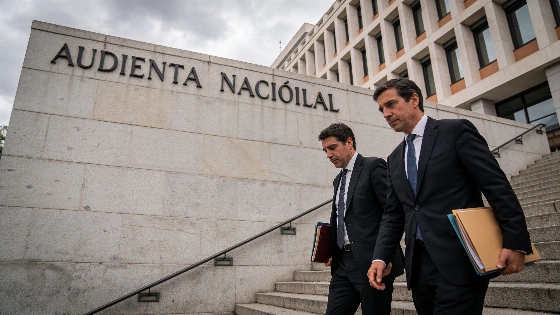
Now the Audiencia de Madrid must act. The court will pick a presiding judge and set a date for the jury trial. This comes as public figures face more scrutiny and calls for transparency. It’s not the first time Spanish courts have handled high-profile cases involving government officials and crisis management, as seen in earlier reports.
Madrid’s prosecutor has drawn a clear line. There’s no proof of personal gain or harm to the university. In a time when trust in legal and academic institutions is under the microscope, this case shows not every investigation ends in scandal. The prosecution’s facts point to a process that was open, by the book, and free of the wrongdoing first alleged.