Carles Puigdemont has questioned Spain's position on Ceuta and Melilla. His remarks come as migration pressures drive a new political clash.
Carles Puigdemont has described Ceuta and Melilla as colonies or cities within Morocco. The former president of the Generalitat said the two Spanish autonomous cities represent a wound from Morocco's perspective. His comments come as Ceuta deals with the fallout from a mass migrant arrival and a growing clash between Madrid and the local government.
In an interview with The Times at his home in Waterloo, Belgium, Puigdemont acknowledged that people in Ceuta are strongly Spanish. He said their position would gain legitimacy through a referendum on self-determination. Spain would not allow such a vote, he said, because the authorities fear Catalan separatists would demand one too.
Марокко не признаёт суверенитет Испании над Сеутой и Мелильей, тогда как испанские и европейские официальные лица настаивают, что оба города являются неотъемлемой частью Испании.
The statement adds a territorial dispute to a crisis already focused on migration and border control.
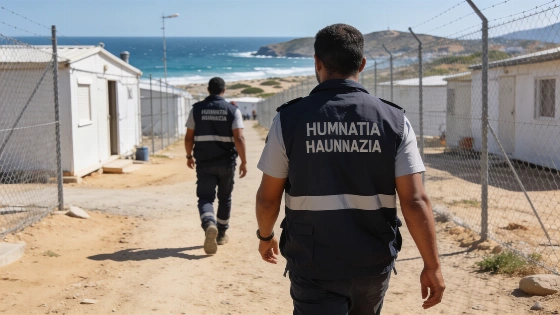
Fernando Grande-Marlaska is due to travel to Ceuta on Monday. He will inspect the temporary facilities used for migrants who entered from Morocco at the end of July. The interior minister is also scheduled to visit the Centro de Acogida Temporal de Extranjeros, units of the Policía Nacional and the Guardia Civil, and the Oficina de Asilo y Refugio opened in the city.
It will be Marlaska's fourth visit since the mass entry from Morocco on 30 July. Thousands of migrants still have no accommodation. Many remain in the city's streets and on its beaches. By mid-September, Spanish authorities said more than 5,300 people had voluntarily returned to Morocco. Procedures involving roughly another 1,000 people were being handled through return and registration mechanisms. On Friday, 1,700 people were moved from the beach to the port. The central government and the administration led by Juan Jesús Vivas have continued to clash over the response.
Европейский парламент принял резолюцию по событиям в Сеуте, в которой, согласно сообщениям о документе, возложил ответственность за массовые переходы на Марокко и призвал соблюдать обязательства по пограничному контролю и реадмиссии. Марокканский представитель при ЕС отверг такую трактовку и заявил, что резолюция не содержит прямого осуждения Рабата.
Antonio Maíllo accused the government of reacting late and erratically. The IU leader said the operation lacked transparency and failed to measure the scale of the humanitarian crisis. He called the episode a tragedy that involved 145 deaths. He also demanded responsibility from the government and the CNI, which he said had failed to anticipate the threat.
The dispute is shaping party strategy too. Santiago Abascal has restarted Vox's electoral campaign before any election has been called. Immigration is now at the centre of his public appearances. Pedro Sánchez's term ends in the middle of July next year. Recent polls cited in the source suggest that Vox could enter government alongside the PP for the first time.
Madrid is trying to manage the crisis while providing financial support. Carlos Cuerpo has defended 309 million euros in aid for Ceuta. He also demanded loyalty from Morocco in cooperation on immigration security and border reinforcement. Cuerpo warned that fear can be fuelled by false or self-interested speeches. Morocco's Foreign Ministry has rejected claims that its authorities caused the crisis. It has instead pointed to smuggling networks and disinformation.
The constitutional dispute over Catalonia is moving at the same time. The Tribunal Constitucional is examining Jordi Turull's appeal against the Supreme Court's refusal to apply the amnesty to the embezzlement offence. The ruling is expected to establish guidance for other cases involving former procés leaders, including Puigdemont. Supreme Court judge Pablo Llarena plans to apply that doctrine to the former Catalan president's case without waiting for a separate ruling.
Puigdemont has said he does not regret the decisions taken during the unilateral independence referendum, even if that means spending his entire life outside Catalonia. Migration management, territorial claims and electoral competition are now being argued through the same political divisions. The government's immediate task is practical. It must provide accommodation, manage the asylum process and maintain cooperation with Morocco while defending Spain's position. The figures and official visits show the scale of the administrative crisis. Political actors are using it to widen their existing battles.