Three Real Madrid players refused to wear shirts supporting Ceuta before the match against Elche, removing them in front of fans and cameras. Their decision drew attention amid ongoing tensions at the Spanish enclave’s border.
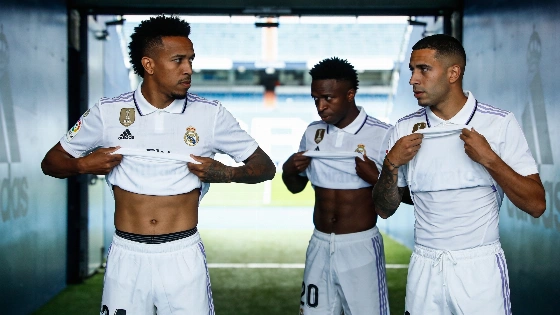
At the Martínez Valero stadium, Vinícius, Mbappé, and Konaté made their stance clear before kickoff. While most of their Real Madrid teammates wore shirts showing support for Ceuta, these three players chose not to take part. Instead, they covered up the shirts and took them off as they walked onto the pitch, making their refusal obvious to everyone watching.
The shirts, handed out before the game against Elche, read "Todos somos caballas" on the front and "nuestra ciudad, nuestra pasión" on the back. Most players wore them as planned, but Vinícius, Mbappé, and Konaté folded the shirts to hide the slogans, then set them aside before the match began. Their actions stood out against the club’s effort to show unity with Ceuta’s residents.
According to official Real Madrid club materials, the solidarity shirt campaign was a planned initiative, not a spontaneous episode, and both teams wore the shirts before kickoff as a sign of support for Ceuta.
The campaign was meant to send a message of support to Ceuta, which has seen a sharp increase in arrivals from Morocco in recent weeks. Thousands have crossed the border, putting pressure on local services and infrastructure. Organizers hoped the gesture would reassure residents and show that the football community stood with them. Several independent outlets reported that the campaign was directly tied to the recent migration crisis, with the shirts intended as a sign of unity during a difficult period for the city.
But the refusal by these high-profile players has raised questions about how such gestures are received. No official reason has been given for their decision, leaving room for speculation about their motives. The lack of explanation has only drawn more attention to their silent protest.
The scale of the migration crisis in Ceuta has been widely debated, with some independent publications citing figures of over 70,000 arrivals, though official statistics remain uncertain due to many migrants returning to Morocco before registration. Frontex, the European border agency, clarified that the late July episode was not included in their standard migration route data for this reason.
This was not the only recent incident. Ez Abde, a Moroccan player for Betis, wore the same shirt before a match against Villarreal and soon faced a wave of online abuse. He later hid related posts from his social media accounts. The backlash shows how sensitive the Ceuta issue is, especially for players with ties to Morocco. According to AfricaSoccer, Abde later said his gesture was meant as a social, not political, statement, highlighting the risks athletes face when taking part in these campaigns.
Football and border politics have often overlapped in Spain. As reported earlier, the Ceuta crisis has split public opinion and dominated media coverage, with politicians and celebrities weighing in on the government’s response. The official Real Madrid website also described a previous show of support for Ceuta by fans at the Bernabéu, where thousands of flags and banners were displayed during a match against Inter, showing how organized these solidarity actions can be.
This episode highlights a gap between club management’s intentions and the personal choices of individual players. When some of the most visible figures on the field refuse to join a campaign, it shows that symbolic gestures have limits and cannot resolve the deeper issues facing Ceuta. The silence of Vinícius, Mbappé, and Konaté drew more attention than any slogan, underlining the complexity behind public displays of unity.