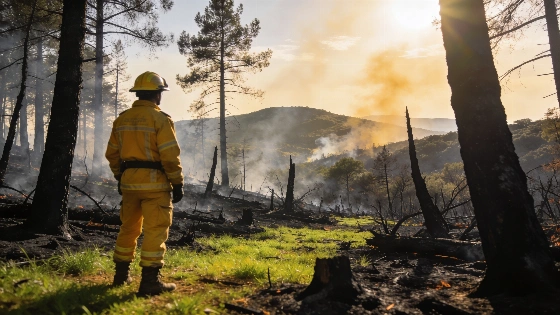
Extremadura steps up firefighting efforts after record-setting 2025. A new wildfire season begins in Extremadura following a record loss of forested areas in 2025. Authorities have strengthened measures, but unions and environmentalists warn of resource shortages and lack of coordination.
Another wildfire season is starting in Extremadura, and the region is once again facing the threat of large-scale forest fires. After the difficult year of 2025, when more than 50,000 hectares burned, the authorities announced an expansion of Infoex resources and new measures to protect the forests. However, representatives of trade unions and environmental organizations believe that these steps are not enough to prevent disaster.
Risks of the new season
The situation is complicated by the fact that, after heavy winter rains, a large amount of grass and shrubbery has grown throughout the region. According to experts, this provides additional fuel for fires, especially with the increasingly frequent abnormal heat. As early as March, major fires broke out in the northern areas of Cáceres province, such as La Vera and the Jerte Valley, with a fire area that surprised even experienced service workers. Wind and hard-to-reach terrain made firefighting difficult, and much of the work had to be carried out by aircraft.
Measures and concerns
The authorities of Extremadura note that a rainy year does not always mean disaster, but they admit: for large fires to occur, several factors must coincide — the presence of fuel, extreme weather, and prolonged unfavorable days. In recent years, the number of outbreaks has decreased, but the area of burned land has grown. The reason is the accumulation of biomass due to depopulation of villages and the decline in traditional forest use.
Among the new measures is the permanent allocation of 138 employees who previously worked only during the summer. This allows for preventive work to be carried out year-round, but according to Infoex head José Antonio Bayona, the scale of these efforts is still not comparable to the region’s forest reserves. Unions argue that prevention is still carried out using outdated methods, and a lack of equipment and personnel prevents effective preparation for the season. In addition, overtime in the summer is compensated by time off in the winter, reducing the amount of preventive work. The unions demand that staff be increased by at least 400 persons.
Coordination and accountability
Environmental organizations point to issues with coordination between agencies after fire management was transferred to the structure for emergency situations. In their opinion, the separation of duties between forestry services, prevention, and firefighting makes rapid response difficult. Environmentalists also call for stricter on-site inspections and a more thorough analysis of the causes of each fire.
Last year, the largest fire occurred in the municipality of Jarilla, where up to 17,000 hectares burned, including significant tracts in the Ambroz and Jerte valleys. Local authorities complain about the lack of direct financial support from the region and note that without external assistance and the solidarity of other municipalities, it would have been impossible to cope with the consequences. The head of Jarilla emphasizes: small towns do not have the resources to independently fight such large-scale disasters.
Context and consequences
Extremadura is among the regions of Spain where the issue of forest fires is particularly acute. According to local authorities, each year preventive measures cover only a small part of the forest area. The question of how responsibility is divided between the state and private landowners remains unresolved. Authorities are urging property owners to play a more active role in implementing fire prevention plans.
The topic of coordination and allocation of resources between municipalities and autonomous communities is becoming increasingly relevant not only for Extremadura. In other regions of Spain, such as Madrid, issues regarding the distribution of powers and support for local initiatives are also sparking debate. For example, the capital's authorities recently approved a large-scale development project on the site of a former shopping center, which triggered protests from residents and a discussion about the role of municipalities in land management — more details can be found in the article about the decision of the Madrid City Council on the Ermita del Santo project.
In 2026, Extremadura once again faces a challenge: whether the new measures and resources will be enough to prevent a repeat of last year's losses will become clear in the coming summer.