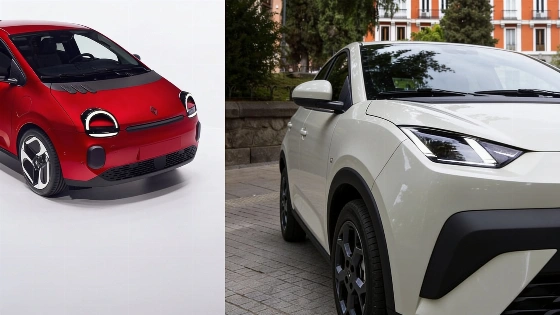
Renault’s new Twingo is listed at 17,463 euros in Spain, undercutting the BYD Dolphin Surf’s 17,830-euro price. With state support, both can fall below 15,000 euros, a first for new EVs in Spain. Renault Spain’s official site lists the Twingo E-Tech at 18,510 euros, with a 4,050-euro Auto+ discount already included.
This is more than a price contest. Built in China, the BYD Dolphin Surf has pushed European brands to rethink their plans. The Twingo, once a popular choice for city drivers seeking a small petrol car, now faces a rival with more battery and powertrain options. Spanish market reviews say the Twingo can fall to 14,293.20 euros after discounts and financing, thanks to brand deals and government support.
Spain’s new Auto+ program can provide up to 6,000 euros in aid to self-employed workers and micro-enterprises buying electric vehicles. Applications open on October 1, 2026, Spanish business press reports.
Size is one of the first differences buyers will notice. The Twingo is smaller, measuring 3.78 meters long and 1.95 meters wide, which suits tight city streets. The Dolphin Surf is 3.99 meters long and 1.72 meters wide, offering a bit more room while remaining designed for urban driving. Neither has a huge boot: the Dolphin Surf offers 308 liters, compared with 260 liters in the Twingo. That rises to 360 liters when the Twingo’s rear seats are slid forward.
Under the hood, the gap widens. Renault offers one configuration: a 60 kW (82 hp) electric motor and a 27.5 kWh battery, with up to 263 kilometers of WLTP range. BYD gives buyers three choices. The base Dolphin Surf has a 65 kW (88 hp) motor and comes with either a 30 kWh battery, for a 220 km range, or a 43.2 kWh battery, for a 322 km range. The top Dolphin Surf has 115 kW (156 hp), but its range drops to 310 kilometers.
Equipment reflects each brand’s priorities. The Twingo comes with a 10.1-inch openR link multimedia system and rear parking sensors. Its rear seats are flexible. The Dolphin Surf matches the screen size and adds electric heated mirrors and LED daytime lights. It also gets steel wheels and air conditioning. Both are built for city life, while BYD’s features challenge the equipment typically offered by European brands.
Industry market reviews put the BYD Dolphin Surf’s starting price in Europe at around 22,900 to 22,990 euros, depending on the country. That is significantly higher than its Spanish entry price after incentives. Local subsidies and programs such as Auto+ can so substantially affect what buyers pay in Spain.
Chinese brands have helped lead prices down by offering buyers more for less. Spain’s car industry is under pressure as BYD and other Chinese manufacturers push established players to rethink prices and value, Spanish business press has reported. Renault’s aggressive Twingo pricing is a direct response to that competition. The current wave of low-cost EVs is also tied to local subsidies, which vary by country and affect the price buyers ultimately pay.
Buyers no longer have to choose between paying extra for an electric badge and settling for older technology. Both the Twingo and Dolphin Surf offer useful range and space for daily use, with equipment to match. The Twingo’s straightforward setup will suit drivers seeking a no-fuss city car; the Dolphin Surf’s battery options may appeal to those who need more range or power.
Spain’s electric car market is moving quickly, and prices within reach of many city drivers are widening choice at the lower end. The Twingo and Dolphin Surf show how competition from outside established European brands is challenging the price barrier that kept electric cars out of reach for years.