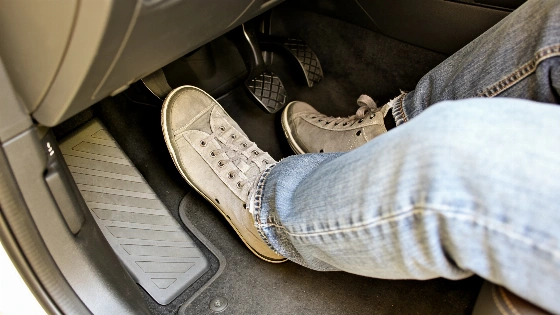
A simple habit behind the wheel could be quietly wearing out your car’s most expensive parts. Experts warn that keeping your left foot on the clutch pedal, even lightly, can shorten its lifespan and trigger avoidable breakdowns.
Resting your left foot on the clutch pedal while driving might seem harmless, but it slowly wears down one of your car’s most expensive parts. CHS Racing Team points out that even a light touch can shorten the clutch’s life, leading to repairs that catch many drivers off guard.
In Spain’s stop-and-go traffic, it’s common for drivers to keep their foot hovering over the clutch, ready for the next move. But as CHS Racing Team explains, this habit—no matter how slight—can keep the clutch partly engaged. Over time, that small pressure adds up, causing the clutch to wear out faster than it should.
According to the RAC, holding the car on the clutch at a stoplight or resting your foot on the pedal increases friction in the clutch release mechanism and can lead to costly repairs.
RAC
The problem doesn’t stop at the clutch. Resting your hand on the gear lever between shifts can also put extra strain on the gearbox. CHS Racing Team advises using the gear lever only when changing gears, then returning both hands to the steering wheel to avoid unnecessary wear on the transmission.
For drivers who spend hours in city traffic, these habits can quickly take a toll. The footrest to the left of the pedals is there for a reason: it gives your left foot a place to relax without risking accidental clutch engagement. This isn’t just about comfort—it helps prevent expensive mechanical problems.
Driving schools and official training materials consistently recommend shifting to neutral and fully releasing the clutch during stops. This practice reduces unnecessary stress on the transmission and aligns with safe driving techniques for manual cars.
Driving Schools and Training Materials
At stoplights or during longer pauses, it’s tempting to keep the clutch pressed down. CHS Racing Team recommends shifting into neutral and letting the clutch out instead. Holding the pedal down while stationary keeps parts of the gearbox moving for no reason, which only increases wear. Only press the clutch when you’re ready to move again.
These changes don’t require a complete overhaul of your driving style. It’s more about paying attention to where your feet and hands rest. Using the footrest, shifting to neutral at stops, and keeping your hands off the gear lever when not changing gears can all help your car’s parts last longer.
As reported earlier, nearly one in five cars in Spain fails its first ITV inspection, often because of neglected maintenance or bad driving habits. CHS Racing Team’s message is simple: prevention starts with the driver, not just with regular service appointments.
Pedro Sánchez’s recent announcement of subsidies up to 7,500 euros for electric vehicle purchases by freelancers and small businesses shows the government’s push for cleaner transport. But whether your car is electric or runs on petrol, careful driving habits still matter. Paying attention to how you use the clutch and gearbox is the best way to avoid breakdowns and expensive repairs.
With repair costs rising and technical inspections getting stricter, the difference between a reliable car and one that’s always in the shop often comes down to small habits. Drivers who treat their car’s controls with care will spend less time and money at the mechanic. In Spain, where getting around is essential, that’s advice worth following.