Why Driving Barefoot in Spain Can Cost You Up to 200 Euros. There is no explicit ban on driving barefoot in Spain, but a police officer may issue a fine if they believe it affects your control of the vehicle. We explain when the risk of a 200-euro penalty becomes real and how to avoid trouble on the road.
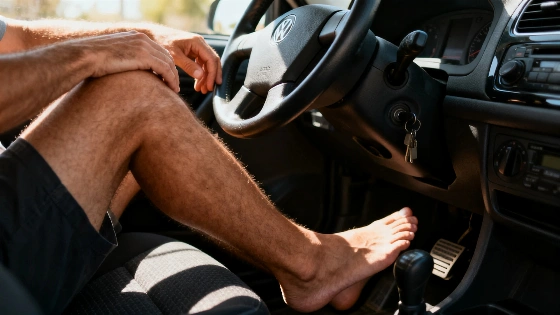
Hot weather, trips to the beach, and spontaneous stops by the pool often result in drivers getting behind the wheel barefoot. Formally, Spanish law does not prohibit driving without shoes — the Road Traffic Regulation contains no explicit requirement regarding shoe type or a ban on bare feet.
However, the absence of a ban does not mean total freedom. The key criterion is safety. If a traffic officer decides that the driver cannot confidently control the vehicle due to the lack of footwear — for example, if the foot slips off the pedal or the reaction to braking is delayed — this can be considered careless driving. In such cases, the fine can reach 200 euros, though usually without penalty points.
The risk is especially high in situations where the road is wet, traffic is heavy, or a quick reaction is required. It’s important to remember: the officer assesses not the fact of bare feet itself, but the actual impact on vehicle control. The same approach applies to driving in flip-flops, high heels, or sandals without proper straps — if the footwear interferes with control, a fine is possible.
When the fine becomes a reality
In practice, the decision to issue a fine depends on the specific situation. If the driver is clearly in control of the vehicle, there may be no complaints. But if the officer notices unsteady movements, missed pedals, or slow reactions, a sanction is quite likely. This is especially true after a visit to the beach or pool, when feet may be wet and slippery.
Context is important too: on an empty road the risk is minimal, but in the city or in challenging weather conditions, an officer may be stricter. As Talent24h notes, the Spanish Directorate General of Traffic (DGT) does not officially prohibit driving barefoot, but strongly recommends choosing shoes with good support and a non-slip sole.
What the DGT recommends
According to the DGT, bare feet have less precise pedal feel, and contact with them becomes less accurate. It's especially dangerous if your feet are wet or if there are foreign objects on the car floor. It's recommended to always have comfortable, light, closed shoes in the car so you can change before driving.
Road safety issues often spark debates among drivers. For example, the topic of parking a car and a motorcycle in the same spot remains relevant — you can learn more about the nuances of such situations in the article about shared parking rules.
Practical conclusions
In Spain, the fine for driving barefoot is not just a formality—it's a real risk for those who ignore safety. Even if the law doesn't prohibit bare feet, an officer has the right to assess the situation based on the circumstances. To avoid trouble, it's enough to keep suitable shoes in the car and remember: road safety is always more important than beach habits.