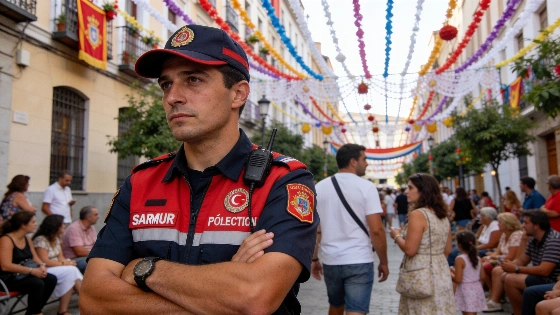
Madrid launches two weeks of non-stop summer fiestas. San Cayetano leads with Samur-Protección Civil as parade marshals and Soleá Morente on stage. The city’s historic neighborhoods prepare for concerts, processions, and local customs.
Madrid’s annual August festival season begins this Tuesday, transforming the city’s central neighborhoods into a hub of music, tradition, and open-air celebrations. The festivities start with San Cayetano in Embajadores, followed by San Lorenzo in Lavapiés and culminating with La Paloma in La Latina, offering residents and visitors a packed schedule of concerts, processions, and community events.
This year, the San Cayetano celebrations in Embajadores stand out as members of Samur-Protección Civil have been chosen to deliver the opening address, marking a tribute to the city’s emergency services. The opening day features a parade of traditional giants and big-headed figures in Plaza del General Vara de Rey, introducing emblematic local characters such as Casta, Susana, Maja de Lavapiés, La Señá Rita, El Julián, and Don Hilarón. The evening’s musical highlight is a performance by Raya Real, known for their sevillanas and rumbas, at 21:30 in the same square.
Throughout the San Cayetano festivities, Calle del Oso will once again serve as a focal point, offering its customary lemonade and chotis dance lessons amid some of Madrid’s most elaborately decorated streets. The main event arrives on Thursday, 6 August, when singer and actress Soleá Morente—who grew up in the neighborhood—takes the stage at 21:30, followed by Rata and a DJ-led closing party. The religious core of the festival, including the San Cayetano mass and procession, is scheduled for Friday at 19:00, with music from María Rodríguez and Montoya & Carmona La Juerga Flamenca extending the night until 2:00.
San Lorenzo’s turn comes from 8 to 11 August in Lavapiés, centered around Plaza de Arturo Barea. The program includes the popular Batalla del Agua, organized by the local festival platform, and the creative “Bolardo voy, bolardo vengo” intervention on several streets. Musical acts include Tributo La Penúltima Sabinera (Saturday 8), Metroolé (Monday 10), and Lotus (Tuesday 11). The San Lorenzo mass and procession will take place on Monday at 19:00, starting from the church.
La Paloma, the most attended of the three, will fill the Jardines de las Vistillas and Plaza de la Paja from 13 to 16 August. The festivities begin with the traditional Salve to the Virgin, performed by Manuel de Segura at midnight in Plaza de la Paja. On the same evening, Celtas Cortos headline a concert at 21:30 in Las Vistillas, followed by Orquesta Tucán and DJ sets from Lady Tupé and Alberto Hache. The main day of La Paloma features official ceremonies, including a floral offering at Colegio La Salle-La Paloma at 12:45, a solemn mass at 13:00, and the lowering of the Virgin’s painting by the municipal fire brigade at 14:15. The procession departs from the church at 19:30. DePol will perform at 21:30 in Las Vistillas, preceded by Olga María Ramos at 20:00, while Plaza de la Paja hosts the Fiesta Roneo Brunch with La Plazuela and DJ sessions until 2:00. Miss Caffeina will close the festivities with a concert at 21:30 in Las Vistillas, and Karavana will play simultaneously in Plaza de la Paja.
Madrid’s summer festivals are a longstanding tradition, offering a blend of religious observance, local culture, and contemporary music. These events not only provide entertainment for those staying in the city during August but also attract tourists seeking authentic experiences. The city’s approach to organizing large-scale public celebrations has parallels with other Spanish cities, such as Barcelona, where recent preparations for the Gràcia festival have included new safety measures and family-friendly spaces, as highlighted in coverage of Gràcia’s evolving festivities. In Madrid, the focus remains on balancing tradition with modernity, ensuring that each neighborhood’s unique character is reflected in the program. The involvement of emergency services as festival marshals and the inclusion of well-known artists like Soleá Morente, Celtas Cortos, and Miss Caffeina underscore the city’s commitment to both safety and cultural vibrancy.
For context, Madrid’s August festivals are among the most significant in Spain’s urban calendar, drawing thousands to the historic streets of Embajadores, Lavapiés, and La Latina. The events are supported by the city council and local associations, with a strong emphasis on community participation. While the core of each festival is rooted in religious tradition, the modern programs increasingly highlight music, dance, and creative street activities. These celebrations are not only a respite for locals during the summer but also a showcase of Madrid’s ability to blend heritage with contemporary urban life.