Pedro Sánchez was pressed by Feijóo and Abascal over alleged Moroccan sway in Spanish policy. He denied any foreign control and confirmed elections for 2027. The debate exposed sharp divisions over Ceuta, education, and national sovereignty.
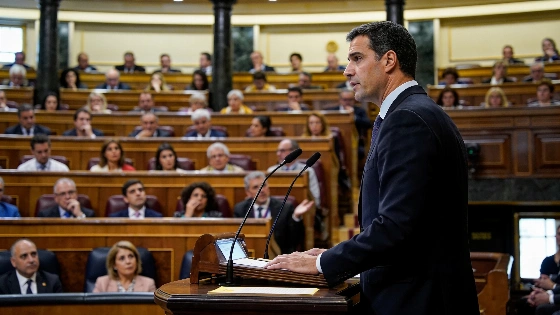
Pedro Sánchez came under heavy criticism in Congress as Alberto Núñez Feijóo and Santiago Abascal accused him of letting Morocco shape Spain’s response to recent events. The Prime Minister, facing questions about the unresolved Ceuta border crisis and poor education results, replied bluntly: he may be called a dog, but he has no master.
The clash intensified when Feijóo, leader of the Partido Popular, said Sánchez had allowed Morocco to dictate Spain’s handling of the Ceuta incident, where thousands crossed the border without repercussions. Feijóo demanded to know what Sánchez would do if it happened again, but Sánchez avoided the hypothetical and instead pointed to increased education funding under his government. In Congress on September 3, 2026, Sánchez stated there is "no firm evidence" that Morocco organized or planned the mass crossing in Ceuta, though investigations continue. He said no state body, international organization, or the EU has provided convincing proof of Moroccan involvement, and described cooperation with Morocco before and after the crisis as effective.
Within 72 hours of the Ceuta border crisis, approximately 63,000 people were returned to Morocco, a process described by Spanish authorities as one of the fastest repatriation efforts in recent European history.
Abascal, representing Vox, escalated the criticism by claiming Sánchez was being blackmailed by Morocco with information about his family. He argued that Spain’s government was effectively operating from Rabat and warned that Morocco’s ambitions reached beyond Ceuta and Melilla to the Canary Islands and even Spain’s cultural identity. Sánchez dismissed these claims as dangerous, saying Abascal’s rhetoric threatened both Spain and Europe. During the session, Sánchez also condemned recent statements by two Moroccan ministers about Ceuta and Melilla as "unacceptable," and said Spain had summoned Morocco’s ambassador in Madrid on August 21 as a formal protest, according to Spanish government reports.
Feijóo’s approach was to portray Sánchez as a leader whose future depended on outside actors and court decisions. He cited the Supreme Court’s suspension of the law granting nationality to descendants of exiles, Spain’s poor Pisa education results, and economic difficulties for families. Feijóo argued that the government’s handling of Ceuta showed a lack of sovereignty, insisting the aggression was orchestrated by Morocco and tolerated by Madrid. Sánchez responded that the government’s actions were based on facts and ongoing investigations, not on unproven accusations.
Sánchez pointed to a doubling of education investment since the Rajoy era and said regional governments—many led by the PP—are mainly responsible for education outcomes. He challenged the opposition to support pending laws on classroom ratios and social media restrictions for minors. Feijóo replied that the best-performing regions in Pisa are governed by the PP, while the worst, Ceuta and Melilla, are under central control.
Media debate intensified after a leaked police report suggested possible involvement of Moroccan forces in the Ceuta incident. Sánchez did not confirm these claims publicly and demanded full disclosure of all documents related to the event. The crisis has increased pressure on the government not only from PP and Vox, but also from left-wing allies, some of whom criticized the response as delayed and lacking clarity on Morocco’s role.
Sánchez also confirmed that the next general elections will be held in 2027 and predicted another win for his party. He criticized the PP for now questioning the law of grandchildren, which had already been in effect during the 2023 elections, and reminded them that Feijóo had won the external vote then.
Abascal’s accusations of blackmail and foreign control went unanswered as he declined to use his remaining time for a final reply. ERC’s Gabriel Rufián warned Sánchez of a possible electoral defeat for the left, citing recent polls that show a PP and Vox majority. Sánchez acknowledged the risk but did not outline a new strategy, instead focusing on his legislative agenda.
Throughout the session, PP deputies pressed the government over Ceuta, warning that the consequences of the border crisis would eventually fall on those in power. Interior Minister Fernando Grande-Marlaska was criticized for an internal communications report profiling journalists by ideology, which he denied was meant for that purpose and apologized in part for the document’s tone.
These exchanges come as Spain’s political climate remains tense, with unresolved border issues and court setbacks fueling opposition attacks. The focus on Ceuta and the government’s relationship with Morocco echoes earlier warnings from Feijóo about possible military action, as reported earlier. The narrative of foreign influence and institutional weakness is now central for the right, while Sánchez’s side points to legislative achievements and promises of stability. The Prime Minister’s defiant stance may energize his supporters, but the opposition’s focus on sovereignty and security is likely to remain strong ahead of 2027. In this environment, any misstep on the border or in the courts risks becoming campaign ammunition.