Record Cocaine Shipment: How the Route for Arconian Was Planned. A scheme to transport 30 tons of cocaine on the vessel Arconian has been uncovered in Spain. The investigation links the route to Dutch drug lord Jos El Gordito. The operation exposed new risks for European ports.
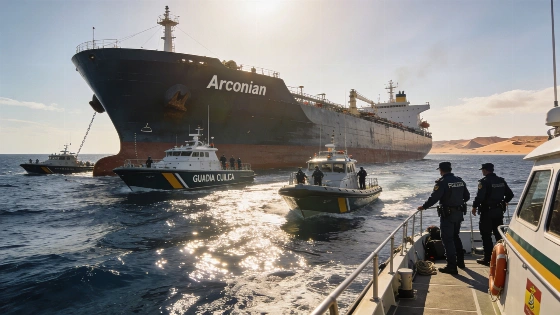
Spanish law enforcement has revealed details of the largest cocaine shipment in history, seized aboard the Arconian vessel off the coast of West Africa. In May 2026, the ship, carrying 30 tons of the drug and a crew of 17 Filipinos, was intercepted on suspicion of preparing a major delivery to Europe. According to the international organization GI-TOC, the Arconian’s route was no coincidence: similar voyages were made by the vessels White Eagle and White Laibeille, indicating a carefully organized trafficking scheme.
The investigation links all three vessels to Dutch drug lord Jos Leijdekkers, known as Jos El Gordito, who, according to GI-TOC, has lived in Sierra Leone since 2023 and coordinates large-scale cocaine shipments to Europe. Authorities believe he may have been the main organizer of the record-breaking cargo. The Arconian departed from Freetown port, with further offloading planned at sea using speedboats to deliver the drugs to the Iberian Peninsula.
GI-TOC analysis showed that the White Eagle and White Laibeille routes in 2024–2025 almost exactly mirrored that of the Arconian: departing from Freetown, stopping at Libyan ports, and staying for extended periods off the Canary Islands, Morocco, and the Spanish coast. Experts note that repeated maneuvers and frequent stops may indicate multiple at-sea drug transfers. During the operation, not only sailors but also six armed guards—all Dutch nationals—were detained.
GI-TOC possesses photos and videos from the White Eagle, showing bags of white powder and a Filipino national responsible for recruiting the crew for Leijdekkers. According to former employees, two million dollars were paid for the purchase of the White Laibeille. The authorities of Sierra Leone deny that the Arconian was loaded in Freetown. However, GI-TOC found no evidence that the cargo was transferred from other vessels after the ship departed the port.
Since 2020, Sierra Leone has become a key hub for the storage and transshipment of cocaine, first for Balkan groups and, after 2023, for the Leijdekkers network. Local fishermen regularly find packets of cocaine, confirming an increase in transit volumes. Six months before the Arconian was seized, two large shipments of 10 tons each and another of 14 tons delivered to Ghana were documented. According to those interviewed, all these deliveries are linked to the Jos El Gordito network.
The official destination of the Arconian was stated as the Libyan port of Benghazi. Libyan authorities launched their own investigation and protested to Spain over the disclosure of information. GI-TOC notes that Libya and the Canary Islands are becoming increasingly important points on the African cocaine transit route to Europe. Frequent disabling of tracking systems and maneuvers off the coast of Spain make it harder to monitor such vessels.
Experts believe that after such a major seizure, criminal networks may reduce shipment sizes to lower their risks. However, the transit route through West Africa and maritime transshipments will remain, according to GI-TOC, a key channel for cocaine deliveries to Europe. In recent years, wholesale cocaine prices in the Netherlands and Belgium have nearly halved, while seizures at the ports of Antwerp and Rotterdam have declined.
In the context of the fight against international crime, it is worth noting that investigations into major schemes linked to supplies from Latin America and Africa are ongoing in Spain. Recently, a court in Madrid began hearing a case involving international transfers and links to Plus Ultra, Venezuela, and China — details of this process are also of interest to investigators and the media.
For reference: Sierra Leone is one of the poorest countries in West Africa, which makes it vulnerable to the activities of international drug networks. In recent years, African routes have become increasingly popular for cocaine transit from Latin America to Europe, with Spain and Portugal remaining among the main gateways for such shipments.