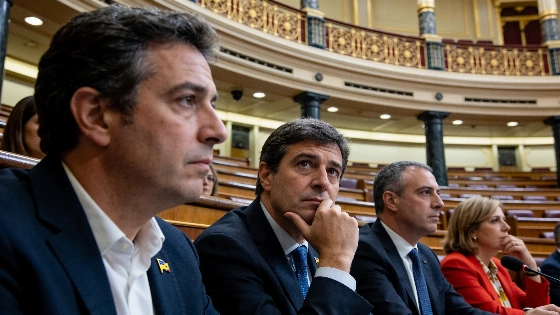
Spain’s Partido Popular has blocked the Barcelona Treaty in the Senate, undermining a key Franco-Spanish agreement and casting a shadow over President Macron’s state visit. The move leaves Spain’s diplomatic standing weakened and exposes deep divisions in national politics.
Spain’s Senate delivered a blow to the country’s foreign policy. The Partido Popular used its majority to stop the Barcelona Treaty from moving forward. This happened as President Emmanuel Macron landed in Madrid for a state visit. The timing was no accident. What should have been a show of unity with France turned into a public display of political infighting.
The Barcelona Treaty was signed in 2023 by Macron and Pedro Sánchez. Its goal was clear: put Spain’s relationship with France on par with France’s ties to Germany and Italy. France’s Parliament ratified the deal in 2025. In Spain, the treaty stalled. The Partido Popular kept blocking it in the Senate. RTVE and several Reuters-compatible reports confirm the Senate’s formal rejection on September 29, 2026. That was the day Macron arrived in Madrid. The Partido Popular’s majority carried the vote.
Macron’s state visit to Spain on September 29–30, 2026, was the first by a French president since 2009, underscoring the symbolic importance of the occasion.
The Partido Popular’s main objection centers on one clause. It says a government member from one country must be invited to the other’s Council of Ministers at least once every three months, taking turns. Spain’s Constitutional Court already ruled this does not break the country’s basic law. France uses similar rules in its treaties with other European countries. RTVE and other Spanish media report the Constitutional Court’s decision was unanimous. The legal argument against the treaty collapsed.
The Partido Popular calls itself pro-European and rooted in Christian humanism. Its actions tell a different story. Blocking a treaty built on European cooperation—especially after Spain joined the European Economic Community in 1986—shows how domestic fights now spill into foreign policy. The Spanish government has called the treaty "historic" and compared it to France’s deals with Germany and Italy. Officials pushed for quick approval after the Constitutional Court’s ruling, according to RTVE.
This was not just a symbolic loss. The Senate’s rejection was a direct snub to a visiting head of state. It overshadowed events hosted by Spain’s monarchy and government. Instead of boosting Spain’s standing in Europe, the Partido Popular’s move left the country exposed. The main opposition party openly undermined a key alliance at the worst possible moment. Spanish and French sources agree: the ratification fight cast a shadow over Macron’s visit. It became a symbol of Spain’s internal political battles playing out on the world stage.
Despite the Senate’s rejection, the French government has expressed confidence that the treaty will eventually be ratified. France completed its own ratification process in 2025, while in Spain the agreement has remained in limbo since its signing in Barcelona in January 2023. The controversy centers on a single clause about regular joint government meetings, which Spain’s Constitutional Court has already deemed constitutional.
Macron’s visit was meant to highlight Franco-Spanish cooperation, as reported earlier. The Senate’s action did the opposite. It raised doubts about Spain’s reliability as a partner. The country’s ability to present a united front in Europe is now in question.
The Barcelona Treaty’s text held no surprises. No hidden deals. No break from European norms. The opposition’s refusal to move forward, even after the Constitutional Court’s approval, looks like pure partisan warfare. Short-term politics won out over Spain’s long-term interests. If the Partido Popular wants to govern, it will have to explain to Europe why it blocked a key agreement with France for domestic gain. The damage is real. Spain’s reputation took a hit. The precedent is set. International commitments now risk being sacrificed in the heat of local political fights.