For four years, families in La Oliva have endured sleepless nights as car-based parties with blaring music invade their streets. With police rarely intervening, residents face mounting health issues and a sense of abandonment.
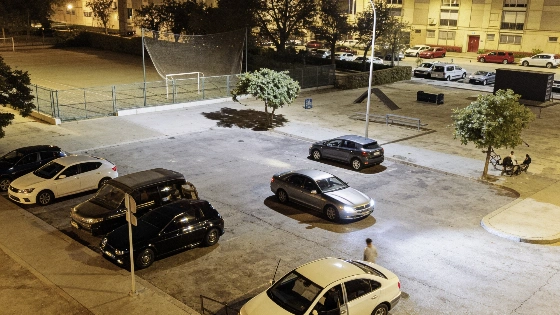
Night falls in La Oliva. The music starts. Flamenco and reggaeton blast from parked cars, shaking walls and nerves. This has gone on for more than 1,500 nights. Families here have watched their sleep disappear as groups of young people turn the street into a club. The music doesn't stop until sunrise.
Jennifer Medina, 34, knows the toll. Panic attacks. Ambulance calls. "You fall asleep not knowing what will happen, and the ambulance has already come for me because of one of my anxiety crises," she says. Her partner, Christian Jiménez, describes the exhaustion. "We go to work like zombies." Even double-glazed windows can't block the noise. In summer, the heat makes it impossible to keep them closed. Rest is out of reach.
In Seville's Viapol district, police riot units were deployed to disperse a massive 'botellona' street party, with residents reporting vandalism and bottles thrown at officers.
People in La Oliva call the police every week. Since 2022, patrols have shown up only twice. Both times, officers just asked the partygoers to move away from the buildings. No fines. No alcohol confiscated. The message is clear. In La Oliva, the rules don't apply. The authorities are missing.
Talking to the partygoers doesn't work. "We go down to talk to them, but there’s no common sense. They jeer and mock, and you have to leave," says José María Algora, director of the Asociación Familiar La Oliva. He lives right next to the parking lot where the parties erupt. "The Local Police say they have no resources at night, and the district police only work from seven in the morning to nine at night. The National Police claim it’s not their responsibility, but we see drug dealing, cars coming and going."
Algora isn't alone. Ángela Ceballos has stopped calling the police. She wakes up to trash and the remains of bonfires. "They’ve even burned a sofa and cut down trees for firewood," says Manuel Holguín, a longtime neighborhood leader. "We’ve reported it 60 times, but the Local Police say they don’t have enough officers. You’d need two pistols to defend yourself," he says, half-joking but not really laughing.
According to Diario de Sevilla, residents in other parts of the city have also described these gatherings as systematic rather than isolated, with neighborhood associations demanding urgent action from municipal, Andalusian, and national police authorities.
The feeling of being abandoned grows sharper when residents see where police do show up. Medina points out, "last Saturday there were two police cars escorting a virgin in La Juncal. For them, yes. For us, nothing. And I love Semana Santa." Algora adds that police always protect religious processions. For families' peace, they don't.
Seville's shortage of local police is well known. On weekends, just two or three patrols cover a city of 700,000. Luis Val, delegate of the municipal police union Sppme, says, "On weekends, they’re dead, at minimum strength, with two or three patrols, when there used to be 15 cars. The city owes us nearly six million in extra services." The numbers don't lie.
Public services in the district keep slipping away. Three bus lines—30, 31, and 32—haven't run their normal routes for years. Attacks on buses forced changes. After a paving stone hit a bus in the Murillo neighborhood, the city asked the government for help. Tussam, the city transport company, now reroutes buses to avoid the most dangerous areas. Stone-throwing and other attacks are common. Algora warns, "What some want is happening: buses don’t enter the neighborhood, and it becomes a ghetto."
District delegate Blanca Gastalver (PP) has been formally censured twice by neighborhood associations for doing nothing. Proposals to remove her failed only because she broke the tie herself. Residents say she promises solutions but nothing changes. The list of problems grows. Power outages. Fights over public celebrations. No end in sight.
As city resources run thin, La Oliva shows what happens when public order and basic services break down. This isn't just a Seville problem. Other Spanish communities face the same struggle. Valencia's Ford Almussafes plant saw public support collapse in a similar way, as reported earlier.
For La Oliva, this is about more than lost sleep. It's about losing faith in the institutions meant to protect them. Families are left alone against chaos every night. The only thing they can count on is that help won't come. The social contract is wearing thin. City leaders can't ignore this any longer. The cost is already being paid, night after night, by people with nowhere else to go.