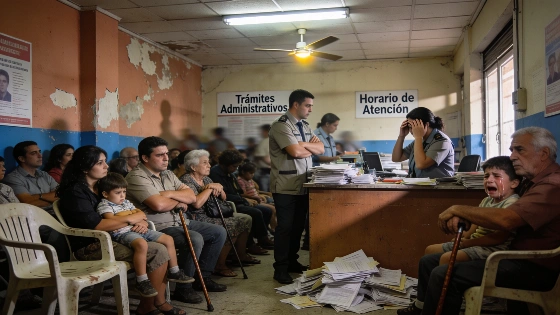
Social services in Seville are overwhelmed, with staff shortages and months-long delays. Six of Spain’s poorest districts face growing risks as families wait for urgent help. Unfilled positions and rising demand deepen the crisis.
Seville’s social services are buckling under pressure, leaving thousands of vulnerable families in limbo as staff shortages and soaring demand collide. In six of Spain’s ten poorest neighborhoods, including Los Pajaritos, residents now face waits of up to five months for basic assistance, while dozens of at-risk children remain unassessed due to a lack of professionals.
Despite recent municipal claims of hiring new staff, union reports reveal that most centers remain critically understaffed. The city’s 14 social service centers are struggling to fill vacancies and cover sick leave, with many teams operating at half strength. In some districts, such as Sevilla Este-Alcosa, there are no child welfare professionals at all, while others like El Cerro del Águila and Tres Barrios—where Los Pajaritos is located—have only a single educator for tens of thousands of residents.
Union delegate Fran Ruiz, who has worked in Seville’s social services for 18 years, warns that the system is shifting from family intervention to mere crisis management. He notes that the number of severe child risk cases has surged, with 90% of those reviewed now classified as high risk. In El Cerro, 40 families are waiting for risk assessments for their children, and in La Macarena, the backlog stretches to five months. The unions are demanding the city double its workforce and urgently fill the seven vacant posts in La Macarena alone.
The city council points to a recent decision to add 28 new positions and the hiring of four additional social workers in May. However, officials admit that national hiring limits prevent them from filling all approved roles. The council has called on the PSOE to lobby for the removal of these restrictions, arguing that some centers previously operated with just one worker. Unions counter that the latest hires are only a temporary fix, mainly to address dependency law requirements and migrant regularization, and do not resolve the chronic shortfall.
According to a 2022 study by the Junta de Andalucía, Seville should have one social worker per 3,000 residents, one psychologist per 19,000, and one social educator per 9,500. Even with recent additions, unions estimate that 155 positions remain unfilled citywide. The situation is especially dire in Tres Barrios, where hundreds of notifications about children at risk due to school absenteeism have gone unattended, with some cases waiting up to 18 months for professional review.
Community leaders say the problem is structural, not temporary. Fernando de Armas, secretary of the Plataforma 3 Barrios-Amate, highlights high staff turnover as a key issue, making it difficult for families to build trust and for workers to understand local needs. He calls for better incentives to retain staff in the city’s most challenging districts.
Mari Carmen Picón, president of Barrios Ignorados and coordinator of the platform Nosotros también somos Sevilla, argues that the chronic neglect of social services reflects misplaced priorities, deepening the divide between Seville’s event-focused image and the reality in its poorest neighborhoods. She notes that the lack of staff forces professionals to focus only on the most urgent cases, such as emergency payments for electricity or food, leaving no capacity for preventive family programs.
In Polígono Sur, only 40% of social service positions are filled. The resulting stress and frustration have led to increased sick leave among staff, some of whom are also dealing with rising aggression from desperate users. Unions report that workers feel overwhelmed and unprotected, and have announced plans for protests starting in September, citing unfulfilled promises from the mayor after a January meeting. A similar strike took place in 2018.
With public services stretched thin, many families turn to NGOs for help. However, these organizations often lack coordination with municipal programs and can disappear when funding runs out, leaving residents once again dependent on under-resourced public services. This cycle of abandonment, as Picón describes, is becoming unsustainable.
The crisis in Seville mirrors challenges seen elsewhere in Spain. For example, Catalonia recently allocated €30 million to identify families missing out on social aid in vulnerable neighborhoods, aiming to add 20,000 people to the welfare system by 2029—a move detailed in this related report. Such initiatives highlight the scale of the problem and the urgent need for systemic solutions across the country.
Spain’s social services are governed by both national and regional regulations, with funding and staffing often subject to political negotiation. In cities like Seville, where poverty rates remain among the highest in the country, the effectiveness of these services is critical for preventing further social exclusion. The ongoing crisis underscores the importance of stable investment, adequate staffing, and coordinated action between public agencies and community organizations.