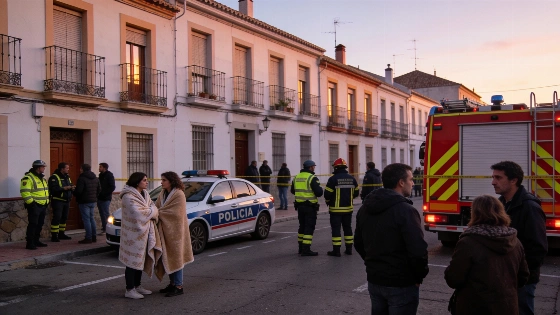
Granada and its metropolitan area experienced six earthquakes overnight. Five were felt by residents, prompting building inspections and evacuations. Health services resumed after safety checks.
Granada province was shaken by a series of six earthquakes during the early hours of Wednesday, with five of the tremors strong enough to be felt across multiple municipalities. The seismic activity, recorded by the Instituto Geográfico Nacional, led to immediate building inspections and forced evacuations in several towns as authorities assessed the impact on homes and infrastructure.
Residents in the Vega de Granada and along the coastal areas reported feeling the quakes, which varied in intensity. The first two tremors, measuring 1.7 and 1.8 on the Richter scale, struck La Zubia and Las Gabias shortly after midnight. Four more followed in Otura, Alhendín, Ogíjares, and Gójar, with magnitudes ranging from 1.6 to 2.5. Notably, Gójar had already been the epicenter of a significant quake the previous day.
Following the events, local authorities began systematic inspections of affected buildings to determine structural safety. In Las Gabias, 600 residents were evacuated and remain uncertain about when they can return home. Three people sustained minor injuries during Tuesday’s stronger quake, including a child who required hospital care. Health centers and hospitals in the area temporarily paused operations for safety checks but have since resumed normal service.
Since August 14, more than 150 tremors have been registered in Granada province, affecting at least twenty municipalities. The ongoing seismic activity has kept emergency protocols in place, with the Junta de Andalucía maintaining the pre-emergency phase of its earthquake response plan since a magnitude 5 quake was recorded in Alhendín last Saturday.
The repeated tremors have caused anxiety among residents, prompting many to leave their homes overnight and head toward the coast. This movement led to traffic congestion on main routes out of Granada, particularly on the motorway toward Motril and near coastal towns such as Salobreña and Almuñécar. The situation echoes previous incidents in the region, as seen when a recent earthquake in Alhendín also caused widespread concern and was covered in detail by reports on earlier seismic events in Granada.
Granada’s location near the boundary of the Eurasian and African tectonic plates makes it one of Spain’s most seismically active areas. While most earthquakes are minor, the region has a history of occasional stronger tremors that can damage buildings and disrupt daily life. Local authorities regularly update emergency plans and conduct drills to prepare for such events. Residents are advised to follow official guidance during periods of increased seismic activity and to remain alert for further updates from emergency services.