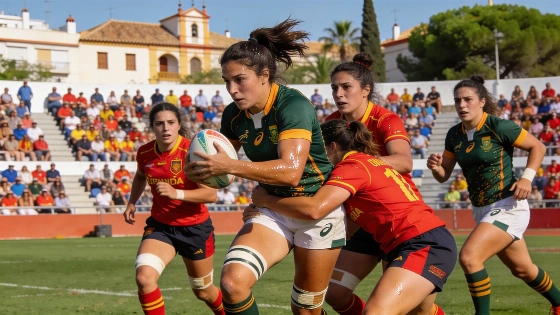
South Africa’s women’s rugby team shut out Spain 20–0 in Sevilla, drawing a crowd of 2,000 and putting the spotlight on the fast-growing women’s game in Andalucía. The match was Spain’s first in the city and put local talent on display.
South Africa’s women’s rugby team left no doubt in Sevilla. They beat Spain 20–0 at the Juan Antonio Arenas field in La Cartuja. The pitch became the center of women’s rugby for one afternoon. But the real shift happened in the stands. More than 2,000 fans packed the venue. Some local reports put the number closer to 3,000. That’s a big leap for women’s rugby in Andalucía. World Rugby confirmed the official attendance topped 2,000. The sport is drawing real crowds now.
For Spain, this was a first. The national women’s team had never played in Sevilla before. The city is famous for football, not rugby. That changed on match day. The event was more than a game. It showed how much the region is putting into women’s sports. The Junta de Andalucía spent €67,000 to upgrade La Cartuja. The stadium got new locker rooms, better seats, and easier access for fans. World Rugby listed the match as part of the WXV Global Series. SuperSport and Rugby365 confirmed the venue, kickoff, and the French referee, Bérénice Loubet.
This was the 10th meeting between Spain and South Africa, with the Springbok Women holding a historical edge of 6 wins in the previous 9 encounters.
Patricia del Pozo, the regional minister for Culture, Historical Heritage and Sport, came to see it herself. She called the match “historic.” Six Andalusian players made Spain’s squad: Marieta Román, Ana Cortés, África Vilches, Carmen Casteluchi, Lea Duche, and Ana Peralta. Del Pozo said these names prove the region’s standards are rising. “Andalucía is ready for major sporting events,” she said. “This is a chance to give women’s rugby the visibility it deserves.”
The day felt like a festival. Not just a match. Fans got a Fan Zone, live music, and a third half with food and entertainment. Local clubs joined in. The Cocodrilas del Universitario de Sevilla CR, who have won two Liga Iberdrola titles and two Iberdrola Iberian Cups, showed up in force. The region has real depth and ambition. AM850 and other sports outlets reported that Spain struggled to finish attacks. South Africa controlled the set pieces and played with more power. That made the difference.
Support for women’s rugby in Andalucía is not a one-off. The regional government has pledged €145,703.96 for 2026 to the Federación Andaluza de Rugby. The money will go to better management, training, and athlete performance. This is part of a bigger push to raise the level of federated sport. The goal is clear. Women’s competitions should get the same attention and resources as men’s.
The match in Sevilla was not only the first official appearance of Spain's women's national team in the city, but also marked the conclusion of South Africa's European tour, with the Springbok Women fielding Byrhandré Dolf in the starting lineup after passing HIA protocols.
Sevilla’s rugby roots run deep. The Real Ciencias Rugby Club is a historic name in Spanish rugby. Its youth programs keep feeding new talent into the sport. Sevilla’s embrace of rugby is not a fluke. Other Spanish regions are also investing in women’s sport. This trend has shown up in other high-profile events reported earlier.
The scoreboard told one story. The bigger story is the new infrastructure and support behind women’s rugby in Andalucía. The turnout, the stadium upgrades, and the local players in the national team all point to a sport on the rise. If the region keeps investing at this pace, Sevilla could become a regular stop for international rugby. It could set the standard for building a real future for women’s sport in Spain.