Spain will provide an additional €50 million this year for US-made weapons for Ukraine. The funding, part of NATO's PURL program, brings Spain's total to €150 million. The move follows pressure to supply Patriot missiles.
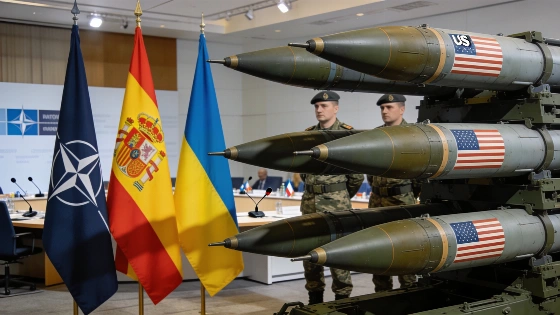
Spain has decided to increase its financial commitment to Ukraine by allocating an extra €50 million in 2026 for the purchase of US-manufactured military equipment. This new funding, confirmed by government sources, adds to the €100 million already pledged last year during Volodimir Zelenski's visit to Madrid. The resources are being channeled through NATO's PURL (Priority Ukraine Requirements List) program, which was established after Donald Trump halted US government funding for arms deliveries to Kyiv and called on European allies to cover the costs if they wanted supplies to continue.
Initially, the Spanish government was reluctant to join the PURL initiative, preferring to send Spanish or European-made weapons to Ukraine and avoid boosting US defense industry profits. However, President Zelenski convinced Pedro Sánchez of the urgent need for Patriot air defense missiles, which are exclusively produced in the United States, to counter Russian attacks. As a result, Spain shifted its position and agreed to participate in the program.
The NATO summit currently underway in Ankara has brought together 32 heads of state and government, including Zelenski, to reaffirm support for Ukraine against the Russian invasion. The issue of military aid to Kyiv remains one of the few points of broad consensus among leaders, especially after Viktor Orbán, previously the most pro-Putin EU leader, lost power. This year, NATO allies plan to deliver €70 billion worth of military supplies to Ukraine, with a similar amount expected next year, funded by Europe and Canada. However, the main challenge is no longer financial, but rather the limited capacity of both European and US defense industries to produce the volume of missiles and ammunition Ukraine requires for a prolonged conflict. In response, Zelenski has requested that Russia allow the licensed production of Patriot systems on European soil.
During his last visit to Spain in March, Sánchez donated five Patriot PAC-2 missiles to Ukraine from the Spanish Army's Air Defense Artillery Regiment based in Marines, Valencia. While not the most advanced version—the Ministry of Defense is working to upgrade them to PAC-3—their unit cost is estimated at $3–4 million, totaling around €15 million. Earlier in 2024, Spain also delivered two batches of second-hand Patriot missiles to Kyiv, though the exact number of projectiles was not disclosed.
Since the Russian invasion in 2022, Spain has committed €3.795 billion in military aid to Ukraine. From 2024 onwards, annual support stands at about €1 billion, surpassing the contributions of France, Italy, or the United States last year. In 2025, Spain ranked as NATO's eighth-largest and the EU's fifth-largest military donor to Kyiv. Additionally, Spain has trained 9,000 Ukrainian soldiers on its territory—roughly 10% of all Ukrainian troops trained in Europe—and is covering 9% of the EU's €90 billion loan to Ukraine, amounting to €2.7 billion annually. Spain has also earmarked €215 million from its share of the European SAFE defense fund to finance further military deliveries to Ukraine.
The Spanish government maintains that its support for Zelenski's administration aligns with its commitment to international law in all conflicts, including those in the Middle East, and demonstrates its dedication to European security—contrary to accusations from Trump. However, this support has not been enough to offset Spain's refusal to commit 5% of its GDP to defense or security spending by 2035, a target set by the US president for all NATO allies. The stance of the US administration towards Pedro Sánchez remains one of the key uncertainties at the Ankara summit.
For context, Spain's growing role in military support for Ukraine reflects a broader shift in European defense policy since 2022. The PURL program has become a central mechanism for coordinating arms deliveries, especially as US domestic politics have complicated direct American aid. The demand for advanced systems like the Patriot has exposed production bottlenecks in both Europe and the US, prompting calls for increased manufacturing capacity and new licensing agreements. Spain's contributions, both financial and in training, position it as a leading supporter of Ukraine within the EU, even as debates continue over long-term defense spending commitments.