Pedro Sánchez and Emmanuel Macron have welcomed the idea of Britain returning to the EU. Andy Burnham says his government will examine every long-term option, from the current relationship to full membership.
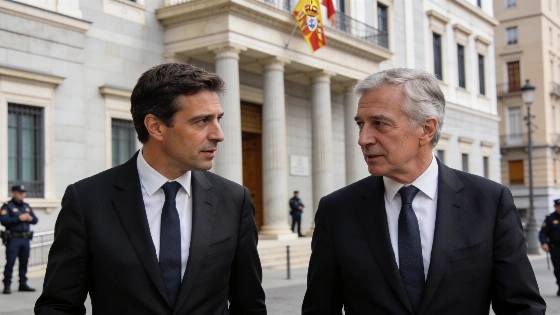
On 30 September 2026, Pedro Sánchez and Emmanuel Macron welcomed the idea of Britain returning to the European Union during a meeting in Madrid. Reuters reported that the two leaders were also discussing stronger European trade defences against China. The response came after British prime minister Andy Burnham said his government would examine every long-term option in its relationship with the bloc.
That changed the tone.
Sánchez said Spain and the European Union would open their arms again to the British people. He called Brexit a major loss for both sides and said Spain would welcome progress towards British membership. Burnham's remarks had drawn a direct response from two major EU countries.
An EU representative said that it is for the British government to set out how it wants to develop relations with the European Union. The comment leaves the door open politically, but does not amount to the beginning of an accession process.
Macron went further.
The French president called a possible return a good decision. He praised Burnham for showing what he described as courage. Macron said Britain's difficulties in dealing with the EU from outside had exposed the limits of its current position. If the British government moved towards rejoining, he said, it would be good news for the United Kingdom and for Europeans. The Guardian reported his public message as "welcome back".
Burnham first set out the idea during Tuesday's Labour Party congress in Liverpool. He said Brexit had caused more harm than benefit to Britain. He also promised to examine different long-term arrangements with the EU.
He did not present the idea as settled policy. Nor did he announce an immediate application for membership. The proposal was a comparison of the available paths and what each one would mean.
The proposal represents a shift from the Labour Party's earlier position for the current parliamentary term, which ruled out returning to the customs union, the single market and free movement. That background helps explain why Burnham's comments were treated as a significant political change in Britain and drew such a direct response in Europe.
On BBC Radio 4, Burnham listed the options more clearly. Britain could keep its existing relationship with the EU. It could return to the customs union or the single market. The most far-reaching route would be full re-entry into the European Union.
For the first time since Brexit in 2020, EU membership itself has entered the debate opened by a British head of government. The BBC described the choices as a long-term political decision. Any government would need to judge what is realistically achievable and weigh the advantages and disadvantages of each route.
The subject has shifted.
The discussion is no longer limited to managing Britain's relationship with the bloc from outside. It now includes the possibility that the country could seek to come back. That remains an option under examination, not a government decision. The question has moved from how to live after Brexit to whether the direction of travel could eventually be reversed.
Public opinion gives the idea a measurable base. A Survation poll published at the beginning of June found that 55 percent of voters would choose to return to the European Union in a referendum. The figure does not decide policy. It also does not establish that a referendum will take place. It does show that re-entry has enough electoral support to enter the political conversation.
EFE and AFP reported that the Madrid meeting produced a direct welcome from the Spanish and French leaders. Their statements do not change Britain's relationship with the EU. They do not begin an accession process. They do remove the diplomatic awkwardness that might have surrounded a British suggestion of a return. Spain and France have made clear that the door would be open.
The European response remains political, not procedural. Any formal application would have to come from London. It would also require a much broader change in British policy.
Burnham has not promised to reverse Brexit. He has made full membership one of the options his government is prepared to examine. Sánchez and Macron have publicly endorsed that possibility. For the first time since 2020, the British debate has moved beyond managing departure. It is now asking whether departure itself should be reconsidered.