Spain calls for EU solidarity after thousands cross into Ceuta. The government criticizes Italy for suspending Schengen rules and highlights Morocco's cooperation. The crisis exposes divisions within Europe over migration.
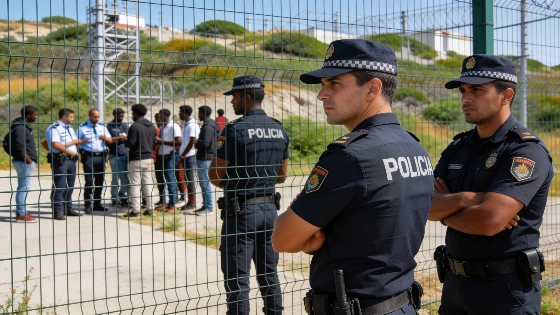
Spain has called for urgent solidarity from its European partners as the government faces a surge of irregular migration into Ceuta. Foreign Minister José Manuel Albares announced that Spain will formally demand support at the upcoming EU interior ministers' meeting, following the arrival of over 50,000 people in the North African enclave. The crisis has triggered a sharp dispute with Italy, which suspended the Schengen agreement for non-European nationals entering from Spain, citing security concerns.
Albares openly criticized the Italian government led by Giorgia Meloni, accusing it of failing to show solidarity and recalling that Italy itself has repeatedly struggled with mass arrivals, particularly on the island of Lampedusa. He emphasized that Spain, despite being a Mediterranean entry point, registers fewer irregular arrivals than Italy and has consistently supported its EU neighbors in similar situations.
The Spanish minister also condemned what he described as a coordinated campaign by reactionary international actors to spread misinformation about Spain's handling of the crisis and the integrity of the Schengen Area. According to Albares, some European governments have amplified false narratives, further complicating the situation.
While maintaining close contact with Moroccan Foreign Minister Naser Burita, Albares refrained from criticizing Rabat for the mass entry, instead highlighting Morocco's swift cooperation in facilitating the return of those who crossed irregularly. He insisted that Moroccan authorities did not demand any concessions in exchange for their assistance and reiterated that all those who entered would be returned, in line with Morocco's stated position.
Asked about the origins of the sudden influx, Albares described the event as unprecedented and pointed to unusual activity on social media, which reportedly misrepresented a Spanish Supreme Court ruling as a signal of open borders. He noted that the unique status of Ceuta and Melilla, as the EU's only land borders with Africa, creates challenges that require a collective European response.
Albares dismissed suggestions of intelligence or security failures, stating that all ministries acted to the best of their abilities. He also stressed the importance of keeping diplomatic channels with Morocco open, crediting this approach for the rapid return of most migrants in recent days.
The Ceuta crisis has exposed deep divisions within the EU over migration policy and border management. As highlighted in a recent report, King Felipe VI has also called for decisive action and unity following the mass entry in Ceuta, underscoring the pressure on Spanish authorities to find both immediate and long-term solutions.
Ceuta and Melilla have long been focal points for migration from Africa to Europe, given their geographic position and the stark economic disparities across the border. The Schengen Area, established to allow free movement within much of Europe, has faced repeated strains during migration surges, with member states sometimes reintroducing border controls in response to security or humanitarian concerns. The current standoff between Spain and Italy reflects broader tensions within the EU over responsibility-sharing and the limits of solidarity in times of crisis.